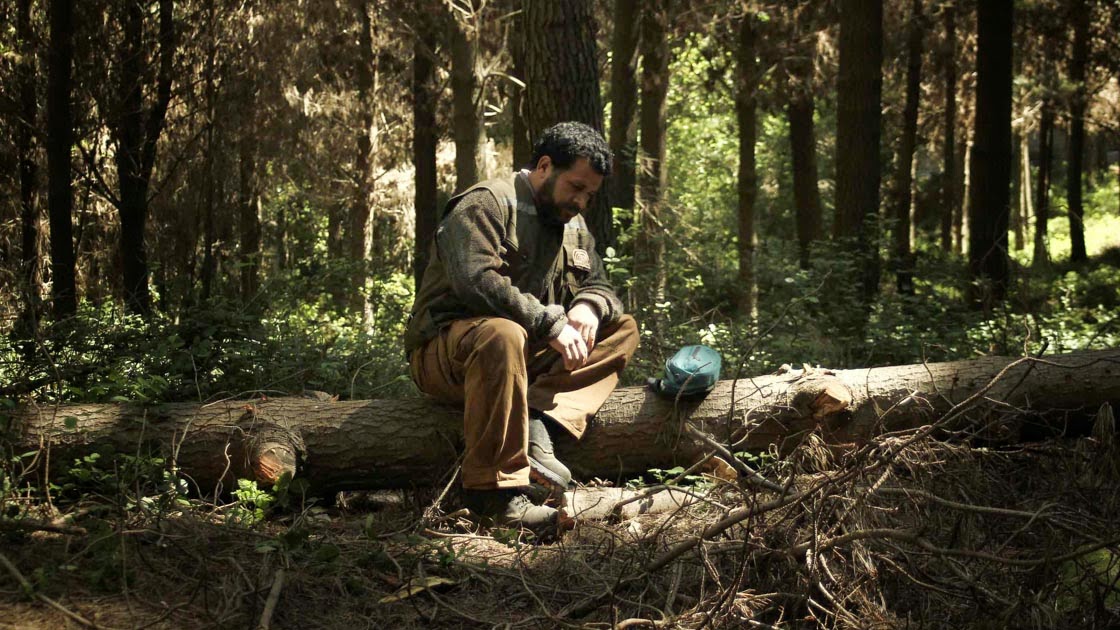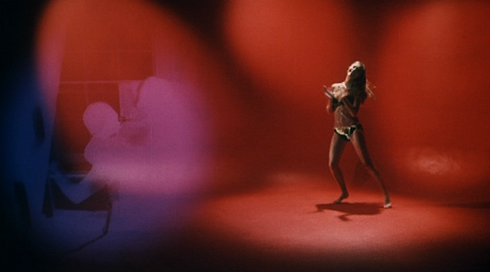
The Other Films (Revisited)
Crash (2004)
dir: Paul Haggis
Original Review (Circa 2006)
Originally Posted to Livejournal and IMDB
I wrote this as a two part review. Part two has spoilers.
Part 1
No, this isn't that one about the sex with car accidents. This is the one about racism in L.A. You know, the one where everybody is a racist, and race is the topic on everybody's mind at all times. Race.
Its like the movie has a form of Tourette's Syndrome where race is the constant theme. Race. Racist. Racism. Race Relations. Relay race.
Paul Haggis made a movie which took the structure of Magnolia, which was used to show the disconnect of people who are tangentially connected, and then screwed it into a 1'53" mental vomit about racism in America. RACE. In the 24 hour period we have 7 stories running parallel all connected and about race. The first hour, people say ridiculous stuff and do absurd things in an effort to be real about racism in America.
For example, the story with Ludicrous and Larenz Tate provides the comic relief. Too bad, the first half of their story is lifted straight from The Bonnie Situation in Pulp Fiction. RACISM. Their section is the Quentin Tarantino section where, instead of being cool and talking about foot massages and religion, the characters talk about race and racism. CONSTANTLY.
The other good thing about it is the Mexican story when the Mexican guy is talking to his daughter. He gives her his invisible impenetrable cloak to protect her from bullets. Decent writing, but that's only because the writers have had daughters and know what they would say in his place.
The rest of the stories are extremely ludicrous. The Hindi does not act in any semblance of realism. The scene where he's trying to get the lock fixed and the Mexican tells him he needs a new door is abbreviated and stupid. Why would anybody act like that? Is it realistic? NOOO. It reminds me more of the convenience store clerk from The Doom Generation. "Six Dollar Sixty Six Cents girly." If i ever watch the second half of the movie, I hope his head is shot off and his bodiless head starts coughing up relish.
I haven't mentioned race in over a paragraph. RACE. RACISM. RACE FOR THE SUN. Better. Then, there is the black guy who wants to be white, Matt Dillon who has a chip on his shoulder against blacks, Ryan Phillippe who looks beautiful and does nothing, and various other bad actors acting badly with bad dialog. When Matt Dillon molests the black producers wife, could I help it if I was cracking up? When Philippe is second guessing his writing up of his partner for racism, can I help but crack up? The movie is so funny when it is being racist. Racist. RACIST I tell you.
Now, mind you, this movie was nominated for Best Picture, Best Director, Best Screenplay, and Best Editing, besides a nod to Matt Dillon who actually did attempt to do a decent job. Who was paid off for that one, I have no clue.
Don't see it unless you feel like being preached at about the racism in society through a bad and unrealistic script from 2 white men over fifty who have no semblance of reality or interaction with real society in any way shape or form.
Grade: D-
...
Part 2
The second half of Crash takes any and all story lines in the first half...and spews them back out in a sort of redemptive, conclusionary, the world is a big coincidence kind of way. And it is in fact one of the worst ways to do it.
Take 1999's Magnolia. People weren't conveniently tied together over and over again. They were just connected in a strange way that happens more often than you think. You know somebody who knows somebody who did something that you knew somebody else was also involved in. Crash takes this wrapping into a serious extreme.
The stories are lined up so everybody meets again. Are there only 5 on the LAPD force? Aren't these people working weird shifts? Dillon and Philippe were a late shift then an early one the next day? And, why did Tate have to be the murdered hitchhiker? Wouldn't it have had more emotional tension, as well as realism, if it had been somebody we had not been following all day long? Like Phillippe just picks up a random hitchhiker and then freaks out. Everybody'd be freaking out.
Eventually, in the second half, the touching invisible cloak scene is used to get the Hindi to shoot the daughter. It ticked me off and made me feel dirty. Not that the Hindi shot the daughter, but that they created a beautiful touching scene and then had it be the direct cause of people tearing up. It really ticked me off. At the writers, not the scene.
The whole movie is fake and totally uncalled for. The coincidences are far too many and they require an extreme suspension of disbelief. Unlike Magnolia which was connected mildly, this had connections upon connections upon connections which were just so over-the-top. The only good part in the second half was when Sandra Bullock falls down the stairs. She doesn't die though. She should have. I cheered when she fell.
The worst part about the movie is it pulls a Magnolia. Not just in structure, but it has a montage over the song "In the Deep" where you see everybody being depressed. Magnolia took this and had post-modern commentary on it by having all of the characters singing along to Aimee Mann's Wise Up. Unfortunately, Magnolia came out in 1999, while Crash came out in 2005. Its hard to make commentary on a movie which won't be made for another 6 years, but it happened. Somehow.
Utter waste of my time.
First half: D-; Second half: lowest grade ever; Overall: F---
Showing posts with label Drama. Show all posts
Friday, July 11, 2014
Monday, July 7, 2014
The Dance of Reality (2013): Exorcising Demons on Screen (Fiction)
dir: Alejandro Jodorowsky
Jodorowsky is constantly exorcising demons through film, but never has it been more explicitly laid out as in the semi-autobiographical The Dance of Reality.
In The Dance of Reality, Jodorowsky documents his childhood growing up as the son of Russian Jewish Communists in Catholic Fascist Chile under the rule of then-dictator Ibanez. Or, rather the film is more about what it felt like to be a kid growing up under those circumstances. But, more than conquering the societal differences, Jodorowsky is commenting on what it was like growing up with an unemotional brute of a father who believed he could toughen his son through emotional and physical abuse.
The two central characters are Jodorowsky as a young boy and his father Jaime (played by Jodorowsky's son, Brontis). Jaime is a store owner, a fire fighter, and a card-carrying Communist who also believes that men should be men, and that teaching Alejandro to be stoic in the face of pain and suffering, then Alejandro will be more of a man. Early in the film, Jaime smacks Alejandro so hard, he breaks a tooth. When Alejandro has to go to the dentist, Jaime forces him to not take anesthesia as the pain makes him tougher. But, the child is not without emotional support. He gives himself a coddling mother who speaks only through opera. And, as a directorial conceit, Alejandro stars as himself standing behind his child avatar, telling him things about the future and offering support to his then-self. It's like those exercises where you write a letter to your child self.
This is the first Jodorowsky which has a directly identifiable major influence, namely that of Fellini's Amarcord, right down to the affinity for gigantic breasts (Alejandro's mom is remarkably well endowed), and bizarre sexuality. A major scene has Jodorowsky being invited into a young circle jerk, but then being rejected because he has been circumcised, while the other boys had not. Another is when he and his mother strips and cover themselves in shoe polish while chasing each other around the room. Clearly, Jodorowsky is exorcising some deep demons through this film.
The Dance of Reality is in part how he remembered childhood, and in part how he wished childhood actually was. He completely removes his older sister from the picture, explores Oedipal fantasies, and also sends his father on a third act journey to try to kill Ibanez, resulting in him being brutally tortured for no real reason and then coming back home broken and contrite. This blends seamlessly with Jodorowsky's usual heightened visuals and overloaded symbolism where the fantasias are filmed with the same surrealism as the realistic portions.
While Alejandro isn't explicit about which parts are real and which parts are fantasias, this is the first time he actually comes right out and explains what he means with his symbolism. Where Jodorowsky used to be content to give just a handful of dialogue that explains what's on screen, here he's spelling everything out through the dialogue. One representative scene is when a spiritualist gives Alejandro a metal symbol from the Christian, Jewish, and Muslim religions, and then explains that each symbol represents the same God...but then Alejandro's father flushes them down the toilet telling him that God doesn't exist. Because this film is more about exorcising personal demons than exploring universal ideas, it is a little forgivable, but it's still the most spelled out movie of his career.
Because of the digital, and the leaning on Amarcord, Jodorowsky's warped fantasies also are less absurdist or surreal than what he used to lead us to. His visual composition is still as stunning as ever, but has now become bolder and more saturated than in films past. However, gone are the strange imagery of potato Jesus statues or church bloodbaths. The medium didn't allow the pervasive strangeness of Jodorowsky's oeuvre.
In the end, The Dance of Reality is more like Jodorowsky lite. He's more interested in exploring his personal past than exploring universal ideas or even general history. If the symbolism gets too strong, he's always around to explain what's happening, and we don't have to work for anything in the film. At 135 minutes, it also feels a little long in the tooth. Despite the flaws of The Dance of Reality, Jodorowsky lite is still more entertaining and interesting than most mainstream films, and it's still highly recommended. It's Jodorowsky at his most accessible, and should be a good starting point if you've never experienced him before.
Friday, July 4, 2014
Manuscripts Don't Burn (2014): Scathing on the Fly
Manuscripts Don't Burn (2014)
dir: Mohammad Rasoulof
SIFF 2014 Film #29
In 2011, Mohammad Rasolulof, an already accomplished director, was arrested and had a 20-year ban from making any films imposed on him by the Iranian government. In secret, Rasoulof broke that government-ban and made Manuscripts Don't Burn, a film which is an indictment of the Iranian government, and it's attempts at intellectual censorship. The end result is a harrowing indictment of not only censorship but also cultural manipulation and how the whole system is set up against everybody's best interest.
The main characters of Manuscripts are not the intellectuals, but a pair of Iranian government assassins who are chasing after a manuscript. The assassins aren't rich or even paid all that well, as one of the two assassins has a sick child who is trying to gain admission to a hospital, but he doesn't have the money to pay for the stay. The assassin is constantly calling their government bosses to try to get the finances transferred to his account so he can prove he can afford for his son to have whatever surgery is needed.
The manuscript is written by a wheelchair-bound intellectual poet who had written a book that was essentially an anti-government screed that had over 100 instances of censorship inflicted upon it. One of the major instances is a story about a group of poets on a bus trip to Armenia, which was supposed to be driven off a cliff in the middle of the night. They intervened and survived, but were warned to be silent about it. The uncensored manuscript is put to a small circle of intellectuals for safe keeping, and the Iranian government is trying to keep it repressed.
The saying of "Manuscripts don't burn" means, essentially, that while the government can censor all they want, they actually don't have the power to remove memories. Until they do. The assassins aren't just going to destroy the manuscripts, but destroy all of the memories of the manuscript from those who have read it, wrote it, and remember it. At this point in their career, murder and death are second nature to the assassins. They even delude themselves to the reasoning they kill, with the father of the sick child questioning whether he's actually doing a good service, or if he's just doing something more immoral.
While the general frame of Manuscripts Don't Burn is a traditional assassin story, the details and the government prescience adds a presence that otherwise would be absent in this rather slow and pondering execution of the usual story. The ponderings of religion and God, and the intersection of religion and government, duty and manipulation of the poor, plus the responsibilities of rebels to try to promote the truth in a lying government, makes Manuscripts more detailed and pointed than the usual generic stories we get.
Rasoulof filmed Manuscripts in secret, and even eliminated all names except his own from the credits. The cast and crew have gone unnamed in the movie in order to prevent them from legal action by the government. But, the secrecy shows. There are some questionable filming choices that seem more rudimentary than thought out, and the pacing is a little erratic even in its heavily plodding pace. However, given the circumstances, one can forgive those technical details over the thoughtful content within the film itself.
Manuscripts Don't Burn isn't an "enjoyable" experience. But, not all cinema should be enjoyable. They should be thought provoking, and Manuscripts Don't Burn has that in spades. Being an anti-government screed, Manuscripts is an important movie, even if it isn't technically amazing.
dir: Mohammad Rasoulof
SIFF 2014 Film #29
In 2011, Mohammad Rasolulof, an already accomplished director, was arrested and had a 20-year ban from making any films imposed on him by the Iranian government. In secret, Rasoulof broke that government-ban and made Manuscripts Don't Burn, a film which is an indictment of the Iranian government, and it's attempts at intellectual censorship. The end result is a harrowing indictment of not only censorship but also cultural manipulation and how the whole system is set up against everybody's best interest.
The main characters of Manuscripts are not the intellectuals, but a pair of Iranian government assassins who are chasing after a manuscript. The assassins aren't rich or even paid all that well, as one of the two assassins has a sick child who is trying to gain admission to a hospital, but he doesn't have the money to pay for the stay. The assassin is constantly calling their government bosses to try to get the finances transferred to his account so he can prove he can afford for his son to have whatever surgery is needed.
The manuscript is written by a wheelchair-bound intellectual poet who had written a book that was essentially an anti-government screed that had over 100 instances of censorship inflicted upon it. One of the major instances is a story about a group of poets on a bus trip to Armenia, which was supposed to be driven off a cliff in the middle of the night. They intervened and survived, but were warned to be silent about it. The uncensored manuscript is put to a small circle of intellectuals for safe keeping, and the Iranian government is trying to keep it repressed.
The saying of "Manuscripts don't burn" means, essentially, that while the government can censor all they want, they actually don't have the power to remove memories. Until they do. The assassins aren't just going to destroy the manuscripts, but destroy all of the memories of the manuscript from those who have read it, wrote it, and remember it. At this point in their career, murder and death are second nature to the assassins. They even delude themselves to the reasoning they kill, with the father of the sick child questioning whether he's actually doing a good service, or if he's just doing something more immoral.
While the general frame of Manuscripts Don't Burn is a traditional assassin story, the details and the government prescience adds a presence that otherwise would be absent in this rather slow and pondering execution of the usual story. The ponderings of religion and God, and the intersection of religion and government, duty and manipulation of the poor, plus the responsibilities of rebels to try to promote the truth in a lying government, makes Manuscripts more detailed and pointed than the usual generic stories we get.
Rasoulof filmed Manuscripts in secret, and even eliminated all names except his own from the credits. The cast and crew have gone unnamed in the movie in order to prevent them from legal action by the government. But, the secrecy shows. There are some questionable filming choices that seem more rudimentary than thought out, and the pacing is a little erratic even in its heavily plodding pace. However, given the circumstances, one can forgive those technical details over the thoughtful content within the film itself.
Manuscripts Don't Burn isn't an "enjoyable" experience. But, not all cinema should be enjoyable. They should be thought provoking, and Manuscripts Don't Burn has that in spades. Being an anti-government screed, Manuscripts is an important movie, even if it isn't technically amazing.
Thursday, July 3, 2014
La Mia Classe (2013): Going Meta-Overboard
La Mia Classe (2013)
(aka My Class)
dir: Daniele Gaglianone
One of my traditionally favorite formulas is the story by proxy formula. In this formula, it's generally a group setting, and in one remote location. The story, we learn, is happening off stage, and we're learning about it piece by piece through the dialogue only. Generally, this works best on radio or on stage, and it helps to have only a handful of stories progressing at any one point. But, the action only sometimes interrupts the on-stage/screen action, with most climaxes happening off screen as well.
This formula must fascinate Gaglianone as well, as La Mia Classe uses the formula, then makes meta-commentary on the meta-formula, thus making everything meta squared.
Gaglianone is tackling some heavy, hefty, issues with La Mia Classe that affect a broad range of people, namely that of immigration and treatment of immigrants in the country of Italy. He sets La Mia Classe as a cinema verite style peek inside an Italian as Second Language class for immigrants. He fills the classroom with a wide variety of immigrants from a variety of places - Egypt, India, Libya, etc - and with a variety of reasons for not wanting to remain in their own country: money problems, cultural pressures, etc. Through the language exercises, we learn what these situations are, and the struggles that happens because of their being an immigrant.
But, Gaglianone also poses La Mia Classe as a documentary about the making of the narrative feature La Mia Classe and also a behind the scenes of the making of that documentary. He opens the film with the students testing their various microphones before the shooting is supposed to begin. But, before that, we explore the halls of an empty school into an empty room, as if the class had happened long ago in a different time period. At one point in the film, a student walks up to the teacher saying he has problems with his residential status papers, but then at another point, a student walks up to a producer with the same problems creating a hullabaloo. At yet another point, the film is documenting the setting up of a shot for a student to sleep in a park, and then filming the sleeping in the park.
Gaglianone goes overly meta to get the point across that this isn't your traditional poor weepy, but this stuff actually happens, but he loses the point of going meta by making his meta narrative kind of wishy-washy in its status as a non-fiction fictional narrative, and thus making everything seem faker and less urgent than it may actually be in that country.As a counter-example, Interior. Leather Bar. is a meta-narrative where the whole thing is scripted, but it's scripted as if it is a documentary, and doesn't half-ass or confuse any of the scenes. Thus, the scenes in Interior. Leather Bar. while climbing up its own ass still, seem more real than the scenes in La Mia Classe.
The missed opportunity is great here, because when La Mia Classe is on, it's really on. And, when it's off, it's really off. It's a point blank disappointment that's greater because it was reaching for the stars and burnt out before it reached it's destination. The acting didn't help because most of the students seemed to be able to speak Italian with great ease, and the mistakes also seemed scripted. But, what do I know? It's not my language. Nor my country.
(aka My Class)
dir: Daniele Gaglianone
One of my traditionally favorite formulas is the story by proxy formula. In this formula, it's generally a group setting, and in one remote location. The story, we learn, is happening off stage, and we're learning about it piece by piece through the dialogue only. Generally, this works best on radio or on stage, and it helps to have only a handful of stories progressing at any one point. But, the action only sometimes interrupts the on-stage/screen action, with most climaxes happening off screen as well.
This formula must fascinate Gaglianone as well, as La Mia Classe uses the formula, then makes meta-commentary on the meta-formula, thus making everything meta squared.
Gaglianone is tackling some heavy, hefty, issues with La Mia Classe that affect a broad range of people, namely that of immigration and treatment of immigrants in the country of Italy. He sets La Mia Classe as a cinema verite style peek inside an Italian as Second Language class for immigrants. He fills the classroom with a wide variety of immigrants from a variety of places - Egypt, India, Libya, etc - and with a variety of reasons for not wanting to remain in their own country: money problems, cultural pressures, etc. Through the language exercises, we learn what these situations are, and the struggles that happens because of their being an immigrant.
But, Gaglianone also poses La Mia Classe as a documentary about the making of the narrative feature La Mia Classe and also a behind the scenes of the making of that documentary. He opens the film with the students testing their various microphones before the shooting is supposed to begin. But, before that, we explore the halls of an empty school into an empty room, as if the class had happened long ago in a different time period. At one point in the film, a student walks up to the teacher saying he has problems with his residential status papers, but then at another point, a student walks up to a producer with the same problems creating a hullabaloo. At yet another point, the film is documenting the setting up of a shot for a student to sleep in a park, and then filming the sleeping in the park.
Gaglianone goes overly meta to get the point across that this isn't your traditional poor weepy, but this stuff actually happens, but he loses the point of going meta by making his meta narrative kind of wishy-washy in its status as a non-fiction fictional narrative, and thus making everything seem faker and less urgent than it may actually be in that country.As a counter-example, Interior. Leather Bar. is a meta-narrative where the whole thing is scripted, but it's scripted as if it is a documentary, and doesn't half-ass or confuse any of the scenes. Thus, the scenes in Interior. Leather Bar. while climbing up its own ass still, seem more real than the scenes in La Mia Classe.
The missed opportunity is great here, because when La Mia Classe is on, it's really on. And, when it's off, it's really off. It's a point blank disappointment that's greater because it was reaching for the stars and burnt out before it reached it's destination. The acting didn't help because most of the students seemed to be able to speak Italian with great ease, and the mistakes also seemed scripted. But, what do I know? It's not my language. Nor my country.
Wednesday, June 25, 2014
Long Distance (2014): The Illusion of Closeness
Long Distance (2014)
(aka 10.000 km)
dir: Carlos Marques-Marcet
SIFF 2014 Film #22
Maybe you've been in a relationship where one side had to go abroad for a year. Maybe you know somebody who has. Most proponents of temporarily long-term long-distance separations frequently say that with the new technology, it will almost be like living with your significant other. You can Skype across the world for next to nothing, and stay intimate via cyber sex. You can talk on the phone, text, e-mail, send photos, converse...it'll be like living at home!
Carlos Marques-Marcet's cinematic debut closely examines the claims that a relationship will be able to sustain the same intimacy over a long period separation. Sergei is a student who is hoping to become a teacher in Barcelona. Alexandra is a photographer who was chosen for a year-long residency in Los Angeles. We meet Sergei and Alex in an opening 17-minute single shot of a morning in Barcelona, where they discuss having a baby before Alex discovers she was selected for Los Angeles. The camera captures the intimacy and familiarity of the couple as they wake up and perform their routines together, as their harmony is never broken up by the force of the editing.
The remaining 90 minutes is following the couple as they cling to each other, and then start to discover life outside each other until life apart has changed them in ways to the point where communication is more difficult than ever. Sergei and Alex believe that the modern wonders of the world - Phone, Texting, Facebook, Skype - will keep them close to each other, and that their relationship can sustain the long-term absence. Marques-Marcet denotes each subsequent scene with the number of days into the separation they are, constantly making us aware of the toll that time takes, even when technology is presenting the illusion of closeness.
To tie in the message of technology being illusory, Alex's project is all about the presence of technology in life. She begins by taking photos of hidden antennae in plain sight, such as in elephant statues. Later, she moves on to a more obvious comparison when she films car rides through city streets, and places them side by side with Google Maps going through the same path, hammering home the point that technology brings us the illusion of being worldly, but it really is all fake.
Sergei and Alex are but mere ciphers for the audience. Marques-Marcet doesn't put much to their character beyond their history together and their career ambitions. Sergei's big dominant characteristic is that he's a Spanish man who has a little bit of a machismo issue, where he dreams that his career is the most important. Alex is a modern woman striving to live her own life and have her own career. Beyond that, we learn little about these characters, and that's almost the point. Technology has a similar effect on all relationships, when we can leave the screen and be absent at our leisure. When we can edit and re-edit e-mails instead of speaking from the heart.
While Long Distance may be working in broader strokes than a movie about a specific relationship, it's important to realize that it's not really about this specific couple. Marques-Marcet is more interested in how technology affects us, and how it deceives us. If you let it, Long Distance will make you question your own reactions, and you will look at whether their reactions will be similar to your own. Or, maybe you'll have a different response. Maybe you'll be frustrated at one character or the other. But, Long Distance is full of questions and insights that I haven't seen tackled yet. Original, dramatic, and entertaining, Long Distance captures what technology actually represents.
(aka 10.000 km)
dir: Carlos Marques-Marcet
SIFF 2014 Film #22
Maybe you've been in a relationship where one side had to go abroad for a year. Maybe you know somebody who has. Most proponents of temporarily long-term long-distance separations frequently say that with the new technology, it will almost be like living with your significant other. You can Skype across the world for next to nothing, and stay intimate via cyber sex. You can talk on the phone, text, e-mail, send photos, converse...it'll be like living at home!
Carlos Marques-Marcet's cinematic debut closely examines the claims that a relationship will be able to sustain the same intimacy over a long period separation. Sergei is a student who is hoping to become a teacher in Barcelona. Alexandra is a photographer who was chosen for a year-long residency in Los Angeles. We meet Sergei and Alex in an opening 17-minute single shot of a morning in Barcelona, where they discuss having a baby before Alex discovers she was selected for Los Angeles. The camera captures the intimacy and familiarity of the couple as they wake up and perform their routines together, as their harmony is never broken up by the force of the editing.
The remaining 90 minutes is following the couple as they cling to each other, and then start to discover life outside each other until life apart has changed them in ways to the point where communication is more difficult than ever. Sergei and Alex believe that the modern wonders of the world - Phone, Texting, Facebook, Skype - will keep them close to each other, and that their relationship can sustain the long-term absence. Marques-Marcet denotes each subsequent scene with the number of days into the separation they are, constantly making us aware of the toll that time takes, even when technology is presenting the illusion of closeness.
To tie in the message of technology being illusory, Alex's project is all about the presence of technology in life. She begins by taking photos of hidden antennae in plain sight, such as in elephant statues. Later, she moves on to a more obvious comparison when she films car rides through city streets, and places them side by side with Google Maps going through the same path, hammering home the point that technology brings us the illusion of being worldly, but it really is all fake.
Sergei and Alex are but mere ciphers for the audience. Marques-Marcet doesn't put much to their character beyond their history together and their career ambitions. Sergei's big dominant characteristic is that he's a Spanish man who has a little bit of a machismo issue, where he dreams that his career is the most important. Alex is a modern woman striving to live her own life and have her own career. Beyond that, we learn little about these characters, and that's almost the point. Technology has a similar effect on all relationships, when we can leave the screen and be absent at our leisure. When we can edit and re-edit e-mails instead of speaking from the heart.
While Long Distance may be working in broader strokes than a movie about a specific relationship, it's important to realize that it's not really about this specific couple. Marques-Marcet is more interested in how technology affects us, and how it deceives us. If you let it, Long Distance will make you question your own reactions, and you will look at whether their reactions will be similar to your own. Or, maybe you'll have a different response. Maybe you'll be frustrated at one character or the other. But, Long Distance is full of questions and insights that I haven't seen tackled yet. Original, dramatic, and entertaining, Long Distance captures what technology actually represents.
Monday, June 23, 2014
The Circle (2014): The History of Gay, Swiss Edition
The Circle (2014)
(aka Der Kreis)
dir: Stefan Haupt
SIFF 2014 Film #20
I'm guilty of being America-centric when it comes to my knowledge of gay history. I know a lot about the history of being gay in America, including pre-Stonewall, and I know about Germany's infamous Paragraph 175 (which has a good documentary, btw). But, I had never heard about Der Kreis (The Circle), a magazine of gay fiction/erotica and photography that also served as a communication underground.
In Switzerland, being gay wasn't illegal. But, it was still frowned upon. Being outed as a homosexual could end your career, and also bring around harassment. But, still, one could distribute material in plain brown envelopes, as long as it passed the censors, and one could throw big gay balls that were seasonal gay megaparties.
To give the history of The Circle a human element, and also to demonstrate how this is not the complete story, Haupt infused the movie with a romance between two men, Rapp and Ostertag, who met at a ball one night, where Rapp was performing as a drag queen. They fell in love, and their relationship sustained the years as they're the characters telling the story in modern times.
Haupt made The Circle with a structure of blending docudrama recreations and actual modern day interviews of Rapp and Ostertag, filling in some of the holes with other interviews of journalists, family members and ex lovers of people who were part of The Circle. The recreations take up the bulk of the film, but the interviews are fascinating, especially since Rapp and Ostertag are two of the cutest 80-year-old gay men you could ever meet.
The Circle goes through the full story of The Circle, from how it was started all the way through how it was destroyed by constant harassment from the police after a series of murders rocked the gay community. While there is probably a certain amount of dramatic license taken, Haupt wisely uses the interviews to keep the maudlin dramatics grounded in reality. There are police beatings, and suicides, and harassment, all of which are representative of larger movements in the gay lifestyle at the time.
The balance between the modern talking heads and the maudlin dramatics really gives The Circle a freshness that few docudramas and period pieces have ever reached. The importance of The Circle is highlighted by the tale of survival of the two talking heads. The weight of the situation is balanced by the sweetness. But, really, the interview/re-enactment format is taken to new levels in The Circle, feeling like the an answer to the new dilemma of Fact/Fiction/Faction in the documentary genre.
(aka Der Kreis)
dir: Stefan Haupt
SIFF 2014 Film #20
I'm guilty of being America-centric when it comes to my knowledge of gay history. I know a lot about the history of being gay in America, including pre-Stonewall, and I know about Germany's infamous Paragraph 175 (which has a good documentary, btw). But, I had never heard about Der Kreis (The Circle), a magazine of gay fiction/erotica and photography that also served as a communication underground.
In Switzerland, being gay wasn't illegal. But, it was still frowned upon. Being outed as a homosexual could end your career, and also bring around harassment. But, still, one could distribute material in plain brown envelopes, as long as it passed the censors, and one could throw big gay balls that were seasonal gay megaparties.
To give the history of The Circle a human element, and also to demonstrate how this is not the complete story, Haupt infused the movie with a romance between two men, Rapp and Ostertag, who met at a ball one night, where Rapp was performing as a drag queen. They fell in love, and their relationship sustained the years as they're the characters telling the story in modern times.
Haupt made The Circle with a structure of blending docudrama recreations and actual modern day interviews of Rapp and Ostertag, filling in some of the holes with other interviews of journalists, family members and ex lovers of people who were part of The Circle. The recreations take up the bulk of the film, but the interviews are fascinating, especially since Rapp and Ostertag are two of the cutest 80-year-old gay men you could ever meet.
The Circle goes through the full story of The Circle, from how it was started all the way through how it was destroyed by constant harassment from the police after a series of murders rocked the gay community. While there is probably a certain amount of dramatic license taken, Haupt wisely uses the interviews to keep the maudlin dramatics grounded in reality. There are police beatings, and suicides, and harassment, all of which are representative of larger movements in the gay lifestyle at the time.
The balance between the modern talking heads and the maudlin dramatics really gives The Circle a freshness that few docudramas and period pieces have ever reached. The importance of The Circle is highlighted by the tale of survival of the two talking heads. The weight of the situation is balanced by the sweetness. But, really, the interview/re-enactment format is taken to new levels in The Circle, feeling like the an answer to the new dilemma of Fact/Fiction/Faction in the documentary genre.
Thursday, June 12, 2014
The Way He Looks (2014): A Blind Coming Out Story
dir: Daniel Ribiero
SIFF 2014 Film #13
SIFF 2014 Film #13
I am so fucking sick of coming-of-age LGBTQ films where
nobody is really evil, and all the tension is from coming out of the closet and
getting your first boyfriend. I realize that this is a legitimate genre, and
needs to be updated for every generation that comes of age, but…goddammit, I am
so fucking sick of it. It’s my problem, and it’s not the fault of any specific
movie, but if I never see another teenager struggle for their freedom while
also coming out of the closet, I’ll be a happy happy faggot.
The Way He Looks
adds in the complication of the main teenager, Leo, being blind and thus giving
him overprotective parents who seek to protect him given his disability. But,
otherwise it runs through the usual gay teenage tropes. It gives him his
teenage female best friend, who kind of has an unrequited crush on him. It
gives him a new interloper best friend, whom he is intended to fall in love
with. It gives him the bullies who make fun of him and call him gay before he
even comes out. It gives him a desire to escape the town he lives in. It’s all
so…done.
That being said, The
Way He Looks isn’t BAD so much as it is TIRED. If you’ve seen the usual
coming-of-age stories, then The Way He
Looks will hold no surprises. The best scene is the mid-credits tag that
has nothing to do with anything. The second best scene is Leo learning how to
shave from his father, as his father talks with him about a student exchange
program.
The Way He Looks
isn’t poorly constructed either. It has the semi-soft, twee, limited-palette,
limited focus dreamy look that so many indie movies have had in recent years.
That look is fine, if you’re into that, but I’m starting to get tired of it
after seeing so many many movies look so so similar. They’re all looking at
sweet emotions that are just so touching.
Basically, The Way He
Looks has come up too late in many of the tropes it puts out. It’s not bad,
if you’re wanting another gay teenage coming of age story, only with no real
rebellion. The worst thing that Leo does is sneak out at night to look at an
eclipse. Or, maybe it’s drinking a whole bunch of vodka and then going swimming
on a class camping trip. But, the rebellion isn’t really all that rebellious.
The closest to an actual negative emotion you feel for any of the characters is
frustration at their inability to communicate.
The Way He Looks has an interesting point of view in that neither Leo nor his object of affection are really conflicted about their sexuality, but more conflicted about the outside acceptance. Much of the tension comes over whether each of them wants to risk queering their friendship for the risk of dating each other, rather than "I can't <b>REALLY</b> be gay, can I?" and also rather than most of it coming from the bullies or the parents.
There is a new trope that is coming around in the coming out movie where the kid doesn't actually come out to his parents. In both this, and the 2014 Netherlands film <i>Boys</i>, the central figure comes out to maybe 2 friends, but never confronts his parents. There is no blessed acceptance, nor a fiery condemnation. That situation is never resolved in either film, creating the one new trope in modern gay film.
The Way He Looks has an interesting point of view in that neither Leo nor his object of affection are really conflicted about their sexuality, but more conflicted about the outside acceptance. Much of the tension comes over whether each of them wants to risk queering their friendship for the risk of dating each other, rather than "I can't <b>REALLY</b> be gay, can I?" and also rather than most of it coming from the bullies or the parents.
There is a new trope that is coming around in the coming out movie where the kid doesn't actually come out to his parents. In both this, and the 2014 Netherlands film <i>Boys</i>, the central figure comes out to maybe 2 friends, but never confronts his parents. There is no blessed acceptance, nor a fiery condemnation. That situation is never resolved in either film, creating the one new trope in modern gay film.
If you want an easy going non-descript coming-of-age
story out of Portugal with skinny boys who get naked once or twice, then you’ll
probably love The Way He Looks. It’s
probably the perfect film during which you could make out (or more) with your
boyfriend. But, if you’ve seen all of the coming of age stories, and are
looking for a new twist on the genre, or something that maybe even reflects how
the youth of today actually looks at the world, then skip it.
Wednesday, June 11, 2014
Lilting (2014): Posthumously Gay
Lilting (2014)
dir: Hong Khaou
SIFF 2014 Film #12
Chinese traditionalism meets English modernism in Lilting, a movie exploring death and homosexuality in the face of conservative parental figures.
Junn, the matriarchal figure of Lilting recently lost her son Kai. In the opening scene, she fantasizes having an ideal joyous conversation with Kai in the nursing home. She wishes she could live with Kai, except that she hates his “best friend,” Richard, whom she detests because she doesn’t understand how Richard and Kai fit together.
The complication of Lilting is that Junn never learned English. She speaks 6 separate dialects of Chinese-based language, but never picked up English. When Richard comes to visit Junn for the first time, they can’t communicate across the language barrier. Junn can only communicate with her new boyfriend, Alan, through intimate behaviors, and not through actual speaking. Richard, however, employs Vann in order to communicate.
Complicating matters further is that Kai had never come out to Junn. She was under the understanding that Richard was just a “friend” and not Kai’s long-term boyfriend. They lived together for years. They have a nice but small loft. When Junn had to move into a nursing home, she couldn’t understand why she couldn’t live with Kai, and resented Richard for the decisions.
Lilting is complicated, original, and tragic enough to move the heartstrings. When Richard struggles with Kai’s loss, but has to mask the depth of his loss to Kai’s mother while also trying to reach her across the void, it’s a genuinely moving emotion that isn’t played for the rafters, nor is it fine tuned to pull the heart strings. Sure, Lilting is suffering from shoegazing cinematic techniques, as it has an overuse of a bland color palette, soft focus, lens flares, and blurry imagery (just to name a few of its borrowed techniques), but the tender subject matter of debating whether or not to posthumously out your dead lover to his mother while also struggling with the desire to not leave her behind actually makes the whole film work.
Ben Wishaw (Richard), Pei-Pei Cheng (Junn) and Naomi Christie have a chemistry that emphasizes the complicated emotions and simmering tensions between the characters. Their work together fills the screen with complexity and raw emotion. But, the other triangle between Peter Bowles (Alan), Pei-Pei, and Naomi doesn’t work nearly as well, and it doesn’t resolve as neatly. The story feels almost as an emphasis for Junn’s stubbornness, and the difficulty that she has even with people she likes, though this could have been better communicated through more scenes with Junn and Kai.
The tragedy and sadness that permeates Lilting is what separates Lilting from all of the other LGBTQ films which are all celebrations of the lifestyle. Lilting is barely about the gay lifestyle, but instead about dealing with the closet as an adult. Its emphasis about conservative stances stemming from traditional behaviors, stubbornness, and a desire to keep everything as it was out of security. Lilting confronts the nature of the need for an adult closet, and how it obscures everything in life. Lilting is about marrying into family, even if they don’t like it. It's about all of these things and it hits all of its marks.
dir: Hong Khaou
SIFF 2014 Film #12
Chinese traditionalism meets English modernism in Lilting, a movie exploring death and homosexuality in the face of conservative parental figures.
Junn, the matriarchal figure of Lilting recently lost her son Kai. In the opening scene, she fantasizes having an ideal joyous conversation with Kai in the nursing home. She wishes she could live with Kai, except that she hates his “best friend,” Richard, whom she detests because she doesn’t understand how Richard and Kai fit together.
The complication of Lilting is that Junn never learned English. She speaks 6 separate dialects of Chinese-based language, but never picked up English. When Richard comes to visit Junn for the first time, they can’t communicate across the language barrier. Junn can only communicate with her new boyfriend, Alan, through intimate behaviors, and not through actual speaking. Richard, however, employs Vann in order to communicate.
Complicating matters further is that Kai had never come out to Junn. She was under the understanding that Richard was just a “friend” and not Kai’s long-term boyfriend. They lived together for years. They have a nice but small loft. When Junn had to move into a nursing home, she couldn’t understand why she couldn’t live with Kai, and resented Richard for the decisions.
Lilting is complicated, original, and tragic enough to move the heartstrings. When Richard struggles with Kai’s loss, but has to mask the depth of his loss to Kai’s mother while also trying to reach her across the void, it’s a genuinely moving emotion that isn’t played for the rafters, nor is it fine tuned to pull the heart strings. Sure, Lilting is suffering from shoegazing cinematic techniques, as it has an overuse of a bland color palette, soft focus, lens flares, and blurry imagery (just to name a few of its borrowed techniques), but the tender subject matter of debating whether or not to posthumously out your dead lover to his mother while also struggling with the desire to not leave her behind actually makes the whole film work.
Ben Wishaw (Richard), Pei-Pei Cheng (Junn) and Naomi Christie have a chemistry that emphasizes the complicated emotions and simmering tensions between the characters. Their work together fills the screen with complexity and raw emotion. But, the other triangle between Peter Bowles (Alan), Pei-Pei, and Naomi doesn’t work nearly as well, and it doesn’t resolve as neatly. The story feels almost as an emphasis for Junn’s stubbornness, and the difficulty that she has even with people she likes, though this could have been better communicated through more scenes with Junn and Kai.
The tragedy and sadness that permeates Lilting is what separates Lilting from all of the other LGBTQ films which are all celebrations of the lifestyle. Lilting is barely about the gay lifestyle, but instead about dealing with the closet as an adult. Its emphasis about conservative stances stemming from traditional behaviors, stubbornness, and a desire to keep everything as it was out of security. Lilting confronts the nature of the need for an adult closet, and how it obscures everything in life. Lilting is about marrying into family, even if they don’t like it. It's about all of these things and it hits all of its marks.
Tuesday, June 10, 2014
Pierrot Lunaire (2014): A Woman Playing A Man Playing A Woman Playing A Man
Pierrot Lunaire (2014)
dir: Bruce LaBruce
SIFF 2014 Film #11
(Best of Festival)
Pierrot Lunaire is the Bruce LaBruce that you’ve come to know, expect, and love. But, it’s not mere political statement with hardcore sexuality. Pierrot Lunaire is a full frontal assault on your sensabilities that doesn’t ever let you get comfortable as you’re watching for its full 51 minute run time.
Did I just say 51 minutes? Yes I did. Being under an hour, Pierrot Lunaire barely counts as a film in length, but starts addressing so many different ideas in those 51 minutes that you can’t call it anything but. By the time, Pierre Lunaire is over, the audience will be overstimulated and exhausted.
Pierrot Lunaire is originally a series of 50 French poems by Albert Giraud published in 1884. These poems were translated into the German by Erich Hartleben. In 1912, Arnold Shoenberg created Three Times Seven Poems from Albert Giraud’s “Pierrot Lunaire”, an atonal musical “melodrama” that used speech-singing and a minimal chamber-esque group of musicians. And, finally, Bruce LaBruce decided to completely subvert that whole work in this short-ish film, which uses the Shoenberg work as his foundation, in as much as a subversive work can be further subverted.
Bruce LaBruce reimagined the main character, Pierrot, as a transsexual, a woman pretending to be a man. I say pretending because it's unclear if Pierrot identifies as a woman but dresses as a man because lesbians were generally not accepted, or if Pierrot truly identifies as a man. Pierrot has a female lover, Columbine, who believes that Pierrot is a man. When Pierrot meets Columbine’s patrician father, the father figures out that Pierrot is a girl posing as a man, and prevents them from seeing each other. As a result, Pierrot embarks on a journey to covet and gain a real live penis for himself.
LaBruce tells the story in a manner similar to the intent of the original stagings of the play. The film is divided into the 21 different poems, each with a title. Each section of 7 poems are divided by modern old school club techno that sounds straight out of a German leather bar. In addition, LaBruce tells the story of Pierrot in two different stagings that he edits together: a cabaret-esque live stage staging, and a traditionally cinematic staging. LaBruce uses a variety of silent film techniques (a la Guy Madden) to pull all of the sections into a semi-cohesive whole, and even has title cards detailing the action on screen, while the poems undercut the action of the film because they have little to do with the onscreen action…or maybe they have everything to do with the action. I'm not entirely sure.
To say that I fully understand Pierrot Lunaire after a single screening would be to lie. This is a film that assaults you on multiple fronts. The music is old-school atonal classical with multi-chromatic poems being read/sang in a variety of tones that ranges from whispering to shrieking. The aural sensibilities never get adjusted from the deep bass of the techno that opens to the atonal apocalypse of the main music. Then trying to process the music and the poems with the multi-level on-screen action, plus having silent-film title cards. It’s a crime on your brain.
For me, Pierrot Lunaire will probably stand up on rewatches. Or, it may possibly fall apart under its own pretension. I don’t know. I know that I will enjoy figuring out what it means. It’s a puzzle box of an arthouse film. I’m not sure if LaBruce is saying something vast about gender, or just fucking with us (are we ever sure of that?). Even if this movie is all style with little substance, it will still be fun as hell to watch and rewatch.
Best of Festival.
dir: Bruce LaBruce
SIFF 2014 Film #11
(Best of Festival)
Pierrot Lunaire is the Bruce LaBruce that you’ve come to know, expect, and love. But, it’s not mere political statement with hardcore sexuality. Pierrot Lunaire is a full frontal assault on your sensabilities that doesn’t ever let you get comfortable as you’re watching for its full 51 minute run time.
Did I just say 51 minutes? Yes I did. Being under an hour, Pierrot Lunaire barely counts as a film in length, but starts addressing so many different ideas in those 51 minutes that you can’t call it anything but. By the time, Pierre Lunaire is over, the audience will be overstimulated and exhausted.
Pierrot Lunaire is originally a series of 50 French poems by Albert Giraud published in 1884. These poems were translated into the German by Erich Hartleben. In 1912, Arnold Shoenberg created Three Times Seven Poems from Albert Giraud’s “Pierrot Lunaire”, an atonal musical “melodrama” that used speech-singing and a minimal chamber-esque group of musicians. And, finally, Bruce LaBruce decided to completely subvert that whole work in this short-ish film, which uses the Shoenberg work as his foundation, in as much as a subversive work can be further subverted.
Bruce LaBruce reimagined the main character, Pierrot, as a transsexual, a woman pretending to be a man. I say pretending because it's unclear if Pierrot identifies as a woman but dresses as a man because lesbians were generally not accepted, or if Pierrot truly identifies as a man. Pierrot has a female lover, Columbine, who believes that Pierrot is a man. When Pierrot meets Columbine’s patrician father, the father figures out that Pierrot is a girl posing as a man, and prevents them from seeing each other. As a result, Pierrot embarks on a journey to covet and gain a real live penis for himself.
LaBruce tells the story in a manner similar to the intent of the original stagings of the play. The film is divided into the 21 different poems, each with a title. Each section of 7 poems are divided by modern old school club techno that sounds straight out of a German leather bar. In addition, LaBruce tells the story of Pierrot in two different stagings that he edits together: a cabaret-esque live stage staging, and a traditionally cinematic staging. LaBruce uses a variety of silent film techniques (a la Guy Madden) to pull all of the sections into a semi-cohesive whole, and even has title cards detailing the action on screen, while the poems undercut the action of the film because they have little to do with the onscreen action…or maybe they have everything to do with the action. I'm not entirely sure.
To say that I fully understand Pierrot Lunaire after a single screening would be to lie. This is a film that assaults you on multiple fronts. The music is old-school atonal classical with multi-chromatic poems being read/sang in a variety of tones that ranges from whispering to shrieking. The aural sensibilities never get adjusted from the deep bass of the techno that opens to the atonal apocalypse of the main music. Then trying to process the music and the poems with the multi-level on-screen action, plus having silent-film title cards. It’s a crime on your brain.
For me, Pierrot Lunaire will probably stand up on rewatches. Or, it may possibly fall apart under its own pretension. I don’t know. I know that I will enjoy figuring out what it means. It’s a puzzle box of an arthouse film. I’m not sure if LaBruce is saying something vast about gender, or just fucking with us (are we ever sure of that?). Even if this movie is all style with little substance, it will still be fun as hell to watch and rewatch.
Best of Festival.
Monday, June 9, 2014
To Kill A Man (2014): Responsibility and Latin Masculinity
To Kill A Man (2014)
dir: Alejandro Fernandez Almendras
SIFF 2014 Film #10
The intersection of masculinity, violence, ego, and protection has been a topic covered for years in cinema. Sam Peckinpah’s 1971 classic Straw Dogs, for example, examines what happens when a wimpy rich guy moves with his wife into his wife’s family's old house in the country, and then is confronted by the countrymen who seek to challenge his masculinity to his breaking point. This was revisited in 2003’s Cold Creek Manor, and again in the remake of Straw Dogs.
Chile finally made its own edition of this formula, adding the Latin culture view of masculinity into the mix. To Kill A Man examines what happens when an educated but effete working man is incessantly harassed by a poor gangster living in the projects. Jorge, the working man, is a researcher in the Santa Julia Research Forest. He takes the bus to work, he is married with 2 teenage kids, a son and daughter, lives in a modest house. He is surviving, but isn't exactly rich. On his way home, after picking up a cake for Jorgeito's 18th birthday, he is harassed by a gang of low-level street hoodlums led by Kalule. When he goes back out to pick up some alcohol for the party, he’s essentially mugged by the group who even stoop to taking his diabetic kit!
This is just another step in an ongoing feud, but one that starts to have serious consequences as Jorgeito mans up and goes to confront Kalule. Kalule shoots Jorgeito. As a result of everything, Jorge’s wife demands a divorce, and when Kalule is released, he’s out for revenge.
To Kill a Man asks a more unique question than the previous films. To Kill A Man asks how far do things have to go before it is OK to take the law into your own hands. Unlike most of the films of this ilk, the police start on the side of Jorge. Jailing and imprisoning Kalule. But, when the feud heats back up, the police start to act more and more impotent, for some reason. Despite the family having a protective order, the police don't arrest Kalule for any of the harassing incidents that he perpetuates. Marta, Jorge’s wife, berates Jorge for not being able to protect his family when their daughter ends up in the hospital. And, so…what does a man do?
Even though this move is full of clichés, it at least runs through them at a very clipping pace, running only a short 82 minutes. There’s little bloat here, instead leaving most of the movie to the main scenes and keeping the scene lengths to be long enough to hold the emotions of the movie. A longer movie would have dragged its ass to a sluggish pace, especially since the way through the movie is fairly well-trodden up until the final 15 minutes.
The final 15 minutes bring up a topic that isn't really addressed in any of the other movies: Responsibility. I’m not going to tell you what happens, but at what point is a person responsible for their actions? What is permissible, and how does conscience figure in? To Kill a Man does manage to ask these questions, even if it doesn't answer them for you personally. The sign of an interesting movie is that it asks you to think what you would do, but doesn't pass any of the moral judgments about your decisions, instead asking you to make them for the movie. It points you to various possibilities but doesn’t say which is right or wrong.
Holding To Kill a Man back from greatness or significance is a pedestrian style it thinks is a conscious choice. It feels like the post-Traffic Mexican films of the 00s, full of browns and greens without a full color palette, and full of seemingly boring cinematography. This is a shame because the movie itself is full of interesting ideas and acting, even if it runs though clichés. It’s a movie that deserves better than the visuals it is given.
dir: Alejandro Fernandez Almendras
SIFF 2014 Film #10
The intersection of masculinity, violence, ego, and protection has been a topic covered for years in cinema. Sam Peckinpah’s 1971 classic Straw Dogs, for example, examines what happens when a wimpy rich guy moves with his wife into his wife’s family's old house in the country, and then is confronted by the countrymen who seek to challenge his masculinity to his breaking point. This was revisited in 2003’s Cold Creek Manor, and again in the remake of Straw Dogs.
Chile finally made its own edition of this formula, adding the Latin culture view of masculinity into the mix. To Kill A Man examines what happens when an educated but effete working man is incessantly harassed by a poor gangster living in the projects. Jorge, the working man, is a researcher in the Santa Julia Research Forest. He takes the bus to work, he is married with 2 teenage kids, a son and daughter, lives in a modest house. He is surviving, but isn't exactly rich. On his way home, after picking up a cake for Jorgeito's 18th birthday, he is harassed by a gang of low-level street hoodlums led by Kalule. When he goes back out to pick up some alcohol for the party, he’s essentially mugged by the group who even stoop to taking his diabetic kit!
This is just another step in an ongoing feud, but one that starts to have serious consequences as Jorgeito mans up and goes to confront Kalule. Kalule shoots Jorgeito. As a result of everything, Jorge’s wife demands a divorce, and when Kalule is released, he’s out for revenge.
To Kill a Man asks a more unique question than the previous films. To Kill A Man asks how far do things have to go before it is OK to take the law into your own hands. Unlike most of the films of this ilk, the police start on the side of Jorge. Jailing and imprisoning Kalule. But, when the feud heats back up, the police start to act more and more impotent, for some reason. Despite the family having a protective order, the police don't arrest Kalule for any of the harassing incidents that he perpetuates. Marta, Jorge’s wife, berates Jorge for not being able to protect his family when their daughter ends up in the hospital. And, so…what does a man do?
Even though this move is full of clichés, it at least runs through them at a very clipping pace, running only a short 82 minutes. There’s little bloat here, instead leaving most of the movie to the main scenes and keeping the scene lengths to be long enough to hold the emotions of the movie. A longer movie would have dragged its ass to a sluggish pace, especially since the way through the movie is fairly well-trodden up until the final 15 minutes.
The final 15 minutes bring up a topic that isn't really addressed in any of the other movies: Responsibility. I’m not going to tell you what happens, but at what point is a person responsible for their actions? What is permissible, and how does conscience figure in? To Kill a Man does manage to ask these questions, even if it doesn't answer them for you personally. The sign of an interesting movie is that it asks you to think what you would do, but doesn't pass any of the moral judgments about your decisions, instead asking you to make them for the movie. It points you to various possibilities but doesn’t say which is right or wrong.
Holding To Kill a Man back from greatness or significance is a pedestrian style it thinks is a conscious choice. It feels like the post-Traffic Mexican films of the 00s, full of browns and greens without a full color palette, and full of seemingly boring cinematography. This is a shame because the movie itself is full of interesting ideas and acting, even if it runs though clichés. It’s a movie that deserves better than the visuals it is given.
Friday, June 6, 2014
3-Mile Limit (2014): Perpetuating the Baby Boomer Rebel Mythos
3-Mile Limit (2014)
dir: Craig Newland
SIFF 2014 Film #9
Stop me if you've heard this one. Some people want to push a new musical development. But, they face an oppressive dominant force who wants to use all their power to shut them down. They battle for the freedom to do what they want...and you can probably figure everything out.
3-Mile Limit is the latest to use this formula, placing Richard Davis in the leading role as a journalist who is determined to bring rock and roll to New Zealand, even though the New Zealand government refuses to play it. Davis is up against Minister Willis, who is a minister of both Radio and the oceans. Davis' idea is to get a boat and an illegal transmitter and broadcast off the coast of New Zealand, in international waters.
Yes, it's the New Zealand edition of Pirate Radio (aka The Boat That Rocked). But, this one is supposed to be based on the story of a real radio station, Radio Hauraki. That should be loosely based, because Richard Davis is a fictitious creations specifically for the movie, and the movie condenses what was originally a 2-year endeavor into what seems like a handful of months, especially because it is constantly an election year for Minister Willis.
The fictionalization of the Radio Hauraki story is really facile, obeying the usual formula to a T. There's even a few love interests that are inserted to have a female character that isn't just a secretary (this was 1966, after all). But, the love story feels too easy and completely fitting with the formula that we've followed before.
Craig Newland doesn't bring anything new to the table. The movie is lightly witty, lightly tense, and just plain pedestrian. It isn't visually interesting. It isn't paced in an original manner. It doesn't have any powerhouse performances or characters. It just sort of exists, like oatmeal. It's safe and easy.
What 3-Mile Limit really does is serve to pacify old people into believing that they were the original rebels for listening to rock n roll. OMG, it was completely against government! We were so bold! And, we forced the government to change to us! It really is the baby boomers completely filling themselves up with tales of their past rebelliousness, and saying they're justified in ruling the world because they rebelled so hard!
Which makes 3-Mile Limit tripe. Complete and utter FICTIONAL tripe.
dir: Craig Newland
SIFF 2014 Film #9
Stop me if you've heard this one. Some people want to push a new musical development. But, they face an oppressive dominant force who wants to use all their power to shut them down. They battle for the freedom to do what they want...and you can probably figure everything out.
3-Mile Limit is the latest to use this formula, placing Richard Davis in the leading role as a journalist who is determined to bring rock and roll to New Zealand, even though the New Zealand government refuses to play it. Davis is up against Minister Willis, who is a minister of both Radio and the oceans. Davis' idea is to get a boat and an illegal transmitter and broadcast off the coast of New Zealand, in international waters.
Yes, it's the New Zealand edition of Pirate Radio (aka The Boat That Rocked). But, this one is supposed to be based on the story of a real radio station, Radio Hauraki. That should be loosely based, because Richard Davis is a fictitious creations specifically for the movie, and the movie condenses what was originally a 2-year endeavor into what seems like a handful of months, especially because it is constantly an election year for Minister Willis.
The fictionalization of the Radio Hauraki story is really facile, obeying the usual formula to a T. There's even a few love interests that are inserted to have a female character that isn't just a secretary (this was 1966, after all). But, the love story feels too easy and completely fitting with the formula that we've followed before.
Craig Newland doesn't bring anything new to the table. The movie is lightly witty, lightly tense, and just plain pedestrian. It isn't visually interesting. It isn't paced in an original manner. It doesn't have any powerhouse performances or characters. It just sort of exists, like oatmeal. It's safe and easy.
What 3-Mile Limit really does is serve to pacify old people into believing that they were the original rebels for listening to rock n roll. OMG, it was completely against government! We were so bold! And, we forced the government to change to us! It really is the baby boomers completely filling themselves up with tales of their past rebelliousness, and saying they're justified in ruling the world because they rebelled so hard!
Which makes 3-Mile Limit tripe. Complete and utter FICTIONAL tripe.
Friday, May 30, 2014
Gerontophilia (2013): Provoking with Maturity
Gerontophilia (2013)
dir: Bruce LaBruce
SIFF 2014 Film #4
Director Bruce LaBruce is now 50, and was 48 when making Gerontophilia. He wants to fuck a 20 year old.
Gerontophilia is about Lake, a young man (probably 19) who discovers he has a fetish for old men. He hadn't known he was gay, as he has a girlfriend, Desiree. The film opens with Desiree kissing Lake intensely as she rattles off a bunch of radical feminists while perhaps having an orgasm. It's her list of female revolutionaries. Men not allowed.
Lake is first seen with a job as a lifeguard where he's sketching old men floating when one old man is floating upside down. Lake rescues him by giving him mouth to mouth, but then discovers he has a boner and connects the two in his young mind.
Lake's single mother gets a new boyfriend who gets both her and Lake a job at an old folks home, where he starts out with bedpan duty and then gets upgraded to sponge baths. As time goes on, he befriends a firey old queen, Melvin Peabody, who is of sound mind when he's not being drugged, and they embark on a relationship that goes past friendship.
Bruce LaBruce isn't being his usual provocative self here, but that doesn't mean that he isn't provoking. He's just provoking differently. Bruce LaBruce isn't filling Gerontophilia with hardcore pornographic gay sex, as he is wont to do. He isn't filming with an ultra-low-budget aesthetic that is punker than thou. Instead, he is challenging what we think about youth and desires and robbing from the cradle.
To say there isn't hardcore sexuality isn't to say there is no sexuality. LaBruce's camera leers over both Lake and Melvin's bodies as objects to be fetishized. Lake is a traditionally beautiful object of youth, and Melvin is a traditionally attractive man of a certain age. To put them next to each other in such fetishistic manners challenges the current state of media of obsessing over youth as beauty.
Of course, LaBruce spends more time leering over Lake's body than over Melvin's body. Lake is frequently shirtless, and in shorts or underwear. But, when the time comes to leer over the older men, LaBruce doesn't shy away from it. In part because he wants us to see that they're all beautiful, and in part because he is hoping to lay young men himself as he gets older.
The style of Gerontophilia is that of the usual crop of indie films. The look is somewhat reminiscent of some cross between Winter's Bone, Short Term 12, and the music video for Dark Star, which is to say it is full of semi-lush but really cold imagery for the most part. There are slow motion shots, traditional montages, and some iconic LaBrucian images, such as Lake's bedroom has a gigantic wall image of Gandhi printed behind his bed, that's almost always in full frame. But, they all serve a much softer LaBruce feel than that of the VHS L.A. Zombie or even The Raspberry Reich which tended to feel overlit and under planned in a very punk manner. Even the acting and editing are softer and less overt than in his previous efforts. It's like LaBruce is trying to say that he can make a traditional movie that everybody will eat up because it's actually common.
But, the problem is that Gerontophilia is a cliche-ridden work that seems almost to loathe his fans. Desiree seems to be one of the people that LaBruce can't stand. She has her own older man fling with her boss at the bookstore, who has a bunch of feminist writers on his personal bookshelf that makes her all gooey with excitement. But, Desiree is all about revolutionary ideas and who and what is a revolutionary, at one point saying that Lake can't be a revolutionary because he's a man. If you replace female with queer in that list, then LaBruce seems almost to be pissing all over his fans who see something political in his overtly political movies. Kind of like he's been trying to piss off his fans for years, and by going through the montagey, cliche-ridden route and placing the words of his more ardent fans in the mouth of somebody he has utter contempt for, then he's testing to see if people actually notice what he's doing. He's provoking, and he's also provoking idolatry.
Gerontophilia is not what you expect from a Bruce LaBruce film. It's pretty, it's mannered, it's measures, it's typical, and it's mildly intelligent. It's not boring due to it's challenges. I quite enjoyed it despite the cliches and the usual plot developments.
dir: Bruce LaBruce
SIFF 2014 Film #4
Director Bruce LaBruce is now 50, and was 48 when making Gerontophilia. He wants to fuck a 20 year old.
Gerontophilia is about Lake, a young man (probably 19) who discovers he has a fetish for old men. He hadn't known he was gay, as he has a girlfriend, Desiree. The film opens with Desiree kissing Lake intensely as she rattles off a bunch of radical feminists while perhaps having an orgasm. It's her list of female revolutionaries. Men not allowed.
Lake is first seen with a job as a lifeguard where he's sketching old men floating when one old man is floating upside down. Lake rescues him by giving him mouth to mouth, but then discovers he has a boner and connects the two in his young mind.
Lake's single mother gets a new boyfriend who gets both her and Lake a job at an old folks home, where he starts out with bedpan duty and then gets upgraded to sponge baths. As time goes on, he befriends a firey old queen, Melvin Peabody, who is of sound mind when he's not being drugged, and they embark on a relationship that goes past friendship.
Bruce LaBruce isn't being his usual provocative self here, but that doesn't mean that he isn't provoking. He's just provoking differently. Bruce LaBruce isn't filling Gerontophilia with hardcore pornographic gay sex, as he is wont to do. He isn't filming with an ultra-low-budget aesthetic that is punker than thou. Instead, he is challenging what we think about youth and desires and robbing from the cradle.
To say there isn't hardcore sexuality isn't to say there is no sexuality. LaBruce's camera leers over both Lake and Melvin's bodies as objects to be fetishized. Lake is a traditionally beautiful object of youth, and Melvin is a traditionally attractive man of a certain age. To put them next to each other in such fetishistic manners challenges the current state of media of obsessing over youth as beauty.
Of course, LaBruce spends more time leering over Lake's body than over Melvin's body. Lake is frequently shirtless, and in shorts or underwear. But, when the time comes to leer over the older men, LaBruce doesn't shy away from it. In part because he wants us to see that they're all beautiful, and in part because he is hoping to lay young men himself as he gets older.
The style of Gerontophilia is that of the usual crop of indie films. The look is somewhat reminiscent of some cross between Winter's Bone, Short Term 12, and the music video for Dark Star, which is to say it is full of semi-lush but really cold imagery for the most part. There are slow motion shots, traditional montages, and some iconic LaBrucian images, such as Lake's bedroom has a gigantic wall image of Gandhi printed behind his bed, that's almost always in full frame. But, they all serve a much softer LaBruce feel than that of the VHS L.A. Zombie or even The Raspberry Reich which tended to feel overlit and under planned in a very punk manner. Even the acting and editing are softer and less overt than in his previous efforts. It's like LaBruce is trying to say that he can make a traditional movie that everybody will eat up because it's actually common.
But, the problem is that Gerontophilia is a cliche-ridden work that seems almost to loathe his fans. Desiree seems to be one of the people that LaBruce can't stand. She has her own older man fling with her boss at the bookstore, who has a bunch of feminist writers on his personal bookshelf that makes her all gooey with excitement. But, Desiree is all about revolutionary ideas and who and what is a revolutionary, at one point saying that Lake can't be a revolutionary because he's a man. If you replace female with queer in that list, then LaBruce seems almost to be pissing all over his fans who see something political in his overtly political movies. Kind of like he's been trying to piss off his fans for years, and by going through the montagey, cliche-ridden route and placing the words of his more ardent fans in the mouth of somebody he has utter contempt for, then he's testing to see if people actually notice what he's doing. He's provoking, and he's also provoking idolatry.
Gerontophilia is not what you expect from a Bruce LaBruce film. It's pretty, it's mannered, it's measures, it's typical, and it's mildly intelligent. It's not boring due to it's challenges. I quite enjoyed it despite the cliches and the usual plot developments.
Wednesday, May 28, 2014
The Midnight After (2013): The Best Philip K Dick Adaptation that Wasn't
The Midnight After (2013)
(aka Lost on a Red Minibus to Taipo)
dir: Fruit Chan
SIFF 2014: Film 2
This is the second film I’ve seen that came from a web story/novel, the first being the rather insane John Dies at the End, which was a novel originally published as a web serial. The Midnight After is based on a web novel by Mr. Pizza on the internet forum HKGolden. And, yes, it’s as insane and episodic as John Dies at the End.
The Midnight After is a Hong Kong take on Philip K Dick’s book Ubik, with a lot of changes. A group of 17 people on a minibus go through a tunnel late at night and end up in a world totally devoid of humans except themselves. As they realize something might be amiss, suddenly they start dying strange deaths. A lot of spoilery things happen, including a spectacular musical number set to a famous David Bowie song. But, I don’t want to give away much more than that.
Half of the fun of The Midnight After is trying to figure everything out. But, ironically, if you find it fun, you’ll also find the final scenes incredibly frustrating. The other half of the fun is the batshit insanity that is in The Midnight After. The characters include a spiritual psychic who sells insurance, a constantly bickering married couple, a couple of young punks named Airplane and Crazy Glue, and a druggie who is constantly on cocaine. They ping off each other, come back together, and gather to meet.
I found The Midnight After to be a helluva ride. I wanted more. The ending leaves you wanting more, in fact. It’s drama and science fiction and comedy and horror and musical and everything you could ever want in a movie all thrown in for a single experience. At 120 minutes, it almost runs a little long, and to be fair the movie could have a couple of minor edits where about 5 minutes might be removable. But, to niggle on 5 minutes when the rest of the movie is just a powerhouse rocket where the pacing ebbs and flows with a psychotic mastery seems petty at best.
The Midnight After doesn’t say anything deeper about life other than “Life can move pretty fast sometimes, and if you don’t appreciate it, you might miss it” and “Be good to each other.” But, that doesn’t matter because the film is all about the experience. It’s a blast, it’s fun, it’s something rather interesting, and gives you some stuff to chew on as you’re watching, so you won’t be bored. Puzzled, sure…but who doesn’t like a good puzzle?
(aka Lost on a Red Minibus to Taipo)
dir: Fruit Chan
SIFF 2014: Film 2
This is the second film I’ve seen that came from a web story/novel, the first being the rather insane John Dies at the End, which was a novel originally published as a web serial. The Midnight After is based on a web novel by Mr. Pizza on the internet forum HKGolden. And, yes, it’s as insane and episodic as John Dies at the End.
The Midnight After is a Hong Kong take on Philip K Dick’s book Ubik, with a lot of changes. A group of 17 people on a minibus go through a tunnel late at night and end up in a world totally devoid of humans except themselves. As they realize something might be amiss, suddenly they start dying strange deaths. A lot of spoilery things happen, including a spectacular musical number set to a famous David Bowie song. But, I don’t want to give away much more than that.
Half of the fun of The Midnight After is trying to figure everything out. But, ironically, if you find it fun, you’ll also find the final scenes incredibly frustrating. The other half of the fun is the batshit insanity that is in The Midnight After. The characters include a spiritual psychic who sells insurance, a constantly bickering married couple, a couple of young punks named Airplane and Crazy Glue, and a druggie who is constantly on cocaine. They ping off each other, come back together, and gather to meet.
I found The Midnight After to be a helluva ride. I wanted more. The ending leaves you wanting more, in fact. It’s drama and science fiction and comedy and horror and musical and everything you could ever want in a movie all thrown in for a single experience. At 120 minutes, it almost runs a little long, and to be fair the movie could have a couple of minor edits where about 5 minutes might be removable. But, to niggle on 5 minutes when the rest of the movie is just a powerhouse rocket where the pacing ebbs and flows with a psychotic mastery seems petty at best.
The Midnight After doesn’t say anything deeper about life other than “Life can move pretty fast sometimes, and if you don’t appreciate it, you might miss it” and “Be good to each other.” But, that doesn’t matter because the film is all about the experience. It’s a blast, it’s fun, it’s something rather interesting, and gives you some stuff to chew on as you’re watching, so you won’t be bored. Puzzled, sure…but who doesn’t like a good puzzle?
Labels:
2013,
comedy,
Drama,
Foreign,
Fruit Chan,
Hong Kong,
horror,
Lost on a Red Minibus to Taipo,
Musical,
Review,
Science Fiction,
SIFF,
SIFF 2014,
SIFForty,
The Midnight After,
The Other Films,
Thriller
Tuesday, May 27, 2014
Half of a Yellow Sun (2014): A movie not made for Americans
Half of a Yellow Sun (2014)
dir: Biyi Bandele
SIFF 2014: Film 1
For those of us who are under a certain age, the Nigerian civil war is almost culturally invisible. For me, personally, I only knew about one thing in my life that was even connected to the civil war, and I didn’t even know that significance: Jello Biafra. Biafra is a very short-lived state that was formed in Nigeria, which had been arbitrarily formed by the UK around a bunch of completely unrelated tribes.
You won’t learn much of that in this movie.
Half of a Yellow Sun is a soap opera romance about narcissistic people who push the sexual revolution, set against the backdrop of the Nigerian Civil War. The novel, I am to understand, is told in a fractured non-linear timeline where there are many climaxes that happen at once, and secrets are revealed in various orders. The film is a completely linear film which linearly tells a shallow-ass story, while negating everything interesting or important.
The central characters of Half of a Yellow Sun are two sisters, Olanna and Kainene, who have just returned to Nigeria from the UK where they received their education. They are rich as their parents seem to have ownerships of companies, or something. It’s kept kind of vague. Anyways, Kainene falls in love with Robert, a currently married white man, and pursues a career as a businesswoman. She all but falls out of the movie, actually.
The actual center of Half of a Yellow Sun is Olanna, who shacks up with a revolutionary professor, Odenigbo, who came from the tribal villages. Odenigbo’s mother doesn’t approve of Olanna, and gets him drunk to sleep with his betrothed. And, then Olanna finds out and sleeps around and it’s all one big soapy mess for the first half of the film, where we watch people travel around Nigeria to deal with their family and occasionally bullshit about politics that are foreign to Americans, but will become important in the second half of the movie.
The second half of the movie is marked by a bunch of military people coming into an airport and slaughtering anybody they deem is Igbo. Igbo, which isn’t explained in the film, are a tribal people who were persecuted by various militant groups, for some reason. That reason isn’t clear in the film, so when the military comes around, it’s a huge surprise. And the second half is the family running from the militant groups intent on killing everybody and taking over the country in an effort to reunite Biafra, which had been formed out of distress, with the rest of Nigeria.
Half of a Yellow Sun is not made for Americans. The novel is Nigerian. The movie is Nigerian. It is made for Nigerians. As an American, this movie is extremely rough unless you’re intimately familiar with the politics of Nigeria, and the history of the Nigerian Civil War. Bandele doesn’t care if you don’t know what’s going on. He doesn’t hold your hand. For example, the families move around Nigeria and reference cities in Nigeria, but only give a map of Nigeria during the first travel. But, then they travel and are given generic mapless points for the cities and general north/south/east/west arrows, but are otherwise not put on the map. Nigeria isn’t a large country smaller than Alaska but larger than Texas. So, when they put cities, if you’re a Nigerian, you probably know where they are in the country, but if you’re American, you’re lost.
To dismiss a film that is made for Nigerians because I didn’t know what the fuck is going on feels extremely nationalistic. If you’re going in to Half of a Yellow Sun to learn about Nigeria and the Nigerian Civil War, you’re going to be disappointed at best. If you just like historical drama and are familiar with the political history of Nigeria, you may enjoy this. Maybe. Perhaps there are political allegories or metaphors that I am missing because I don’t know everything. Perhaps the extremely soapy drama is some sort of deeper story that directly relates to Nigeria. I don’t know.
But, the soap opera seemed shallow and trite, the characters seemed boring, and, other than Thandie Newton, Chiwetel Ejiofor, and John Boyega, the acting seemed passable at best. I was lost in the politics of the Civil War and not sure why I should be caring about these annoying people, one of whom kept being called a revolutionary. It’s because of my America-centric knowledge that I might not be appreciative of the film, but it wasn’t made for me. I feel inadequate to judge it. But, I didn’t like it.
dir: Biyi Bandele
SIFF 2014: Film 1
For those of us who are under a certain age, the Nigerian civil war is almost culturally invisible. For me, personally, I only knew about one thing in my life that was even connected to the civil war, and I didn’t even know that significance: Jello Biafra. Biafra is a very short-lived state that was formed in Nigeria, which had been arbitrarily formed by the UK around a bunch of completely unrelated tribes.
You won’t learn much of that in this movie.
Half of a Yellow Sun is a soap opera romance about narcissistic people who push the sexual revolution, set against the backdrop of the Nigerian Civil War. The novel, I am to understand, is told in a fractured non-linear timeline where there are many climaxes that happen at once, and secrets are revealed in various orders. The film is a completely linear film which linearly tells a shallow-ass story, while negating everything interesting or important.
The central characters of Half of a Yellow Sun are two sisters, Olanna and Kainene, who have just returned to Nigeria from the UK where they received their education. They are rich as their parents seem to have ownerships of companies, or something. It’s kept kind of vague. Anyways, Kainene falls in love with Robert, a currently married white man, and pursues a career as a businesswoman. She all but falls out of the movie, actually.
The actual center of Half of a Yellow Sun is Olanna, who shacks up with a revolutionary professor, Odenigbo, who came from the tribal villages. Odenigbo’s mother doesn’t approve of Olanna, and gets him drunk to sleep with his betrothed. And, then Olanna finds out and sleeps around and it’s all one big soapy mess for the first half of the film, where we watch people travel around Nigeria to deal with their family and occasionally bullshit about politics that are foreign to Americans, but will become important in the second half of the movie.
The second half of the movie is marked by a bunch of military people coming into an airport and slaughtering anybody they deem is Igbo. Igbo, which isn’t explained in the film, are a tribal people who were persecuted by various militant groups, for some reason. That reason isn’t clear in the film, so when the military comes around, it’s a huge surprise. And the second half is the family running from the militant groups intent on killing everybody and taking over the country in an effort to reunite Biafra, which had been formed out of distress, with the rest of Nigeria.
Half of a Yellow Sun is not made for Americans. The novel is Nigerian. The movie is Nigerian. It is made for Nigerians. As an American, this movie is extremely rough unless you’re intimately familiar with the politics of Nigeria, and the history of the Nigerian Civil War. Bandele doesn’t care if you don’t know what’s going on. He doesn’t hold your hand. For example, the families move around Nigeria and reference cities in Nigeria, but only give a map of Nigeria during the first travel. But, then they travel and are given generic mapless points for the cities and general north/south/east/west arrows, but are otherwise not put on the map. Nigeria isn’t a large country smaller than Alaska but larger than Texas. So, when they put cities, if you’re a Nigerian, you probably know where they are in the country, but if you’re American, you’re lost.
To dismiss a film that is made for Nigerians because I didn’t know what the fuck is going on feels extremely nationalistic. If you’re going in to Half of a Yellow Sun to learn about Nigeria and the Nigerian Civil War, you’re going to be disappointed at best. If you just like historical drama and are familiar with the political history of Nigeria, you may enjoy this. Maybe. Perhaps there are political allegories or metaphors that I am missing because I don’t know everything. Perhaps the extremely soapy drama is some sort of deeper story that directly relates to Nigeria. I don’t know.
But, the soap opera seemed shallow and trite, the characters seemed boring, and, other than Thandie Newton, Chiwetel Ejiofor, and John Boyega, the acting seemed passable at best. I was lost in the politics of the Civil War and not sure why I should be caring about these annoying people, one of whom kept being called a revolutionary. It’s because of my America-centric knowledge that I might not be appreciative of the film, but it wasn’t made for me. I feel inadequate to judge it. But, I didn’t like it.
Monday, May 19, 2014
Die Screaming, Marianne (1971): Why Murder?
Die Screaming, Marianne (1971)
dir: Peter Walker
I'm going to say this up front. The whole review here is one big spoiler given the way that Peter Walker structured this movie so oddly that you have no idea what is actually happening for just about an hour. Things happen, more things happen, explanations and dialogue happens...but then you get the plot an hour into the movie. If you don't want to even know the basics, back out now because there is no way to talk about the movie without giving away the spoilers.
Die Screaming, Marianne opens with a hotel that has a sign out front. The sign has Marianne's name and face on it, as if she is a performer. This seems to be occurring some morning in Spain. Marianne has already realized she has to hightail it out of the hotel, and there are a couple of guys that are coming to look for her. She has to leave her lover of the night and leaves out a window in time to get away by running down a road, and a steep hillside, and almost getting run over by some guy, whom she then picks up.
There are no explanations given, this is just the pre-credits scene explaining that Marianne is on the run and has met some English guy with a sports car in Spain. After a credits sequence of Marianne as a go-go dancer, Marianne is then being forced into marrying Sebastian, the guy she met two weeks ago in a sports car, with his friend Eli and a flower lady as their witness. But, she gives the magistrate Eli's name, and so now she is legally wed to Eli. And, as she packs up and leaves Sebastian's place (with whom she had been living for two weeks), she tells him that his attempt was a really lousy attempt.
Eventually we learn that Sebastian is really hooking up with some girl named Hildegard and the Judge (who are living together), and everybody is out to get Marianne for some reason that is left semi-unexplained. It's vaguely about money. Marianne, now shacking up with Eli, tells him that they're both in danger but won't tell him or us what the hell is going on. Even after Eli has had an attempt on his life, and Marianne has run away to continue her career as a go-go dancer, and then returned to Eli, she still refuses to say what is going on.
Around the hour mark (give or take a few minutes), when Marianne and Eli have been invited to The Judge's house in Portugal, we finally learn that Marianne is the daughter of The Judge, and Hildegard is her half-sister. Marianne is wealthy because her recently-deceased mother was wealthy and left her a lot of money in a trust fund not to be touched until she is 21. Marianne is about to turn 21 in a few days, and will receive the money as well as a bunch of documents that will incriminate The Judge for some legal wrong doing. It's all explained in about 5 minutes, because even though this provides the whole basis of the movie, the movie is all about trying to kill Marianne for no good reason.
The plot of Die Screaming, Marianne seems to be an experiment to negate the need for the MacGuffin, but really emphasizes the need for purpose. By dropping the audience into the middle of an ongoing story, Walker is asking us to care about the welfare for this seemingly street smart and also seemingly perpetually chased young woman simply because she is being chased. Additionally, the MacGuffin in the middle of the movie is one of importance and one of non-import. Not only is the prize for killing Marianne just additional money for the rich people (non-import), but it is also one of self-preservation for the Judge and other people of power with the incriminating documents. One is a silly reason for murder but the other seems reasonable, and Walker seems to be asking "Is there a good justification for murder? If so, what is a good justification for murder?" His answer, by placing the MacGuffin in the middle, seems to be that there is no reason to kill this girl, and we should care about anybody in trouble simply because they don't deserve to be in trouble.
The final 45 minutes of Die Screaming, Marianne is taken up by various people trying to kill each other. Hildegard tries to kill Sebastian by taking out the brakes on his car, but the Judge takes it instead. Hildegard and Sebastian try to kill Marianne in various ways. Eli and Marianne try to kill Hildegard and Sebastian to save their life. It's all just a big jumble of who's killing who in what way. Although, I should note that this is now my earliest instance of death or torture by sauna.
Because the structure of Die Screaming, Marianne is so mixed up, the audience spends the majority of the first hour not quite knowing who they should be rooting for. It seems like we should be rooting for Marianne, but she acts like an overly street smart cold woman who doesn't care much for anybody but herself. But, we don't know if she's somebody on the lam or a mob girl or a squealer or what. She could have killed the wrong person, but we don't know. However, after the revelations start coming, then we figure out that we can root for Marianne and Eli and actually support their survival.
Which led me to wonder, "why do people watch movies with titles like Die Screaming, Marianne?" Not even as a judgment, because I watched it, but as a sort of thought game. Do we want to see somebody named Marianne die or just attempted to be killed? Do we want her to die because of some sort of character retribution and she deserves it? Or, do we want her to die because she's innocent? Or, do we just want to see her saved?
Die Screaming, Marianne is marketed as a horror movie, but it isn't a horror movie. It's a drama/thriller with all the pacing constantly cut off at its pass. It's all cat and mouse and who will survive. The meta questions that Die Screaming, Marianne are far more interesting than the movie itself, which is otherwise a poorly-paced, underacted, mundane movie of people trying to kill each other while wearing the worst of 1970s fashions and hairstyles. But, the questions it asks may be ones you might not know the answers to.
dir: Peter Walker
I'm going to say this up front. The whole review here is one big spoiler given the way that Peter Walker structured this movie so oddly that you have no idea what is actually happening for just about an hour. Things happen, more things happen, explanations and dialogue happens...but then you get the plot an hour into the movie. If you don't want to even know the basics, back out now because there is no way to talk about the movie without giving away the spoilers.
Die Screaming, Marianne opens with a hotel that has a sign out front. The sign has Marianne's name and face on it, as if she is a performer. This seems to be occurring some morning in Spain. Marianne has already realized she has to hightail it out of the hotel, and there are a couple of guys that are coming to look for her. She has to leave her lover of the night and leaves out a window in time to get away by running down a road, and a steep hillside, and almost getting run over by some guy, whom she then picks up.
There are no explanations given, this is just the pre-credits scene explaining that Marianne is on the run and has met some English guy with a sports car in Spain. After a credits sequence of Marianne as a go-go dancer, Marianne is then being forced into marrying Sebastian, the guy she met two weeks ago in a sports car, with his friend Eli and a flower lady as their witness. But, she gives the magistrate Eli's name, and so now she is legally wed to Eli. And, as she packs up and leaves Sebastian's place (with whom she had been living for two weeks), she tells him that his attempt was a really lousy attempt.
Eventually we learn that Sebastian is really hooking up with some girl named Hildegard and the Judge (who are living together), and everybody is out to get Marianne for some reason that is left semi-unexplained. It's vaguely about money. Marianne, now shacking up with Eli, tells him that they're both in danger but won't tell him or us what the hell is going on. Even after Eli has had an attempt on his life, and Marianne has run away to continue her career as a go-go dancer, and then returned to Eli, she still refuses to say what is going on.
Around the hour mark (give or take a few minutes), when Marianne and Eli have been invited to The Judge's house in Portugal, we finally learn that Marianne is the daughter of The Judge, and Hildegard is her half-sister. Marianne is wealthy because her recently-deceased mother was wealthy and left her a lot of money in a trust fund not to be touched until she is 21. Marianne is about to turn 21 in a few days, and will receive the money as well as a bunch of documents that will incriminate The Judge for some legal wrong doing. It's all explained in about 5 minutes, because even though this provides the whole basis of the movie, the movie is all about trying to kill Marianne for no good reason.
The plot of Die Screaming, Marianne seems to be an experiment to negate the need for the MacGuffin, but really emphasizes the need for purpose. By dropping the audience into the middle of an ongoing story, Walker is asking us to care about the welfare for this seemingly street smart and also seemingly perpetually chased young woman simply because she is being chased. Additionally, the MacGuffin in the middle of the movie is one of importance and one of non-import. Not only is the prize for killing Marianne just additional money for the rich people (non-import), but it is also one of self-preservation for the Judge and other people of power with the incriminating documents. One is a silly reason for murder but the other seems reasonable, and Walker seems to be asking "Is there a good justification for murder? If so, what is a good justification for murder?" His answer, by placing the MacGuffin in the middle, seems to be that there is no reason to kill this girl, and we should care about anybody in trouble simply because they don't deserve to be in trouble.
The final 45 minutes of Die Screaming, Marianne is taken up by various people trying to kill each other. Hildegard tries to kill Sebastian by taking out the brakes on his car, but the Judge takes it instead. Hildegard and Sebastian try to kill Marianne in various ways. Eli and Marianne try to kill Hildegard and Sebastian to save their life. It's all just a big jumble of who's killing who in what way. Although, I should note that this is now my earliest instance of death or torture by sauna.
Because the structure of Die Screaming, Marianne is so mixed up, the audience spends the majority of the first hour not quite knowing who they should be rooting for. It seems like we should be rooting for Marianne, but she acts like an overly street smart cold woman who doesn't care much for anybody but herself. But, we don't know if she's somebody on the lam or a mob girl or a squealer or what. She could have killed the wrong person, but we don't know. However, after the revelations start coming, then we figure out that we can root for Marianne and Eli and actually support their survival.
Which led me to wonder, "why do people watch movies with titles like Die Screaming, Marianne?" Not even as a judgment, because I watched it, but as a sort of thought game. Do we want to see somebody named Marianne die or just attempted to be killed? Do we want her to die because of some sort of character retribution and she deserves it? Or, do we want her to die because she's innocent? Or, do we just want to see her saved?
Die Screaming, Marianne is marketed as a horror movie, but it isn't a horror movie. It's a drama/thriller with all the pacing constantly cut off at its pass. It's all cat and mouse and who will survive. The meta questions that Die Screaming, Marianne are far more interesting than the movie itself, which is otherwise a poorly-paced, underacted, mundane movie of people trying to kill each other while wearing the worst of 1970s fashions and hairstyles. But, the questions it asks may be ones you might not know the answers to.
Friday, May 16, 2014
Video Girl (2011): The Formula of Faith
Video Girl (2011)
dir: Ty Hodges
Chick Tracts were once a common part of the Baptist experience. They told formulaic stories of people losing themselves and finding salvation in Christ. The formulas were passed down through the annals of time, and constantly updated to reflect the changing times.
One of the most common ones was a person from the small town going to the big city and losing themselves in sin before finding salvation back at home. This formula has been adapted through the ages, including Valley of the Dolls, Beyond the Valley of the Dolls, Mahogany, and now Video Girl. All of these movies are adaptations of the same basic formula through the ages, and only one is a satire.
The title character is Lorie, a young adult girl from Small Town Anywhere. Lorie is a mousy fragile student who works in an antique shop and is besties with Jason, a young handsome man who wants to make it to the NBA, despite not getting a college scholarship. Lorie has taken a break from college following a car accident that happened one party night. The car accident shattered her knee and her dreams of being a ballet dancer.
While out dancing with her sister, Lorie finds the attraction of the music video director, Shark (no, I'm not kidding), and is personally invited to be in the video he is shooting the next day. At the behest of her outgoing sister, she goes to the set and becomes a featured "video girl," as in the model who stands next to the rapper and does nothing but gyrate, getting paid $800 for the effort.
Shark then invites Lorie out to LA to be his girlfriend and personal video girl, but doesn't want her to have a career outside his own, making her a kept woman. After interactions with other more independent video girls, Lorie develops a coke habit, fights for her own dependence, becomes a wreck on the set, becomes just another video girl and has an encounter with the "director's couch" before ultimately ending up drugged and passed out next to a dumpster. After a stay at the hospital, Lorie returns home to find Jesus and peace with her mind.
Just to hammer home the idea that video girls are all shallow pieces of crap that need to be saved, Ty Hodges finishes the film with a during credits reel of interviews with other video girls who start to comment on other girls and how they're better than everybody else. You know, because a video girl may watch this, and be saved to find peace back home among family. Never you mind any of their back stories.
What this movie has in adapting for the times, it lacks in subtlety and quality. While Ty Hodges fills the frame with beautiful people, including Haylie Duff (sister of Hilary) and Dolce & Gabbana model Adam Senn, they're all merely competent as actors. The acting is the quality of a small community church play warning about the evils of the big city. Coming off worse is the central actress Meagan Good, whose transition from innocent fearful broken girl to coke-addicted ego-driven delusional semi-success is wracked with overacting that doesn't even go over the top enough for hilarity.
The problem with writing about Video Girl is that it is like kicking a puppy when it's down, except when you realize just how corrupt the vision in this movie is. Video Girl warns that Los Angeles will eat most small town girls alive, and that it will turn you into your most immoral self if you don't have a penis. Not one of the success stories in Video Girl is a woman. And, women can't help themselves. They will be turned into party girls by their friends.
Men, however, can be rappers or directors or producers or basketball stars (Jason eventually lands a position with the LA Clippers), and they will not kowtow to the corrupting nature of Los Angeles. Meanwhile, the only successful woman is Nana, the hardworking teacher in a small town who has no ambitions to be anything bigger than a teacher. She doesn't dream anything but for her grandchildren, after their mother died somehow. Lorie's sister dies for her boyfriend's sins. Lorie becomes a drug-addicted broken woman who can be saved. The video girls are all shallow objects. And, even the radio host is a corrupting force who objectifies Lorie before she falls prey to the nature of LA.
The other moral that this movie doesn't want you to notice is that there are people who are successful in Los Angeles who aren't completely horrible terrible people. You don't actually have to fall prey to all of the various temptations that the new Babylon holds for good small town Christians like the viewers. But, we're supposed to think that Shark is an evil person because he hangs with a girl that he hung with when Lorie first met him 90 minutes earlier (though he spends the rest of the movie bashing her and her reputation). We're supposed to think all of LA is like the rapist producer who will slip you GHB just to get into your pants, and everybody there is corrupt. Unless you're a basketball star, because they're always honorable.
Video Girl is a deceptive film that is meant to be soothing to those who believe it. It is preaching to the choir, but it's low budget trappings (such as an over-dependence on handheld) and bad acting undermine any impact the movie actually has to the people who aren't already pre-disposed to hate on Los Angeles. It's totally judgey, really sexist, and overly silly. But, there aren't enough transgressively hilarious moments for Video Girl to stand up next to the likes of Mahogany. Not to mention, unlike Mahogany, Video Girl doesn't give Lorie any success to look up to, and instead says the best a black girl can attain is kept woman or an all-too-low-paid schoolteacher (they do need to be paid more). Which is a really really sad statement.
dir: Ty Hodges
Chick Tracts were once a common part of the Baptist experience. They told formulaic stories of people losing themselves and finding salvation in Christ. The formulas were passed down through the annals of time, and constantly updated to reflect the changing times.
One of the most common ones was a person from the small town going to the big city and losing themselves in sin before finding salvation back at home. This formula has been adapted through the ages, including Valley of the Dolls, Beyond the Valley of the Dolls, Mahogany, and now Video Girl. All of these movies are adaptations of the same basic formula through the ages, and only one is a satire.
The title character is Lorie, a young adult girl from Small Town Anywhere. Lorie is a mousy fragile student who works in an antique shop and is besties with Jason, a young handsome man who wants to make it to the NBA, despite not getting a college scholarship. Lorie has taken a break from college following a car accident that happened one party night. The car accident shattered her knee and her dreams of being a ballet dancer.
While out dancing with her sister, Lorie finds the attraction of the music video director, Shark (no, I'm not kidding), and is personally invited to be in the video he is shooting the next day. At the behest of her outgoing sister, she goes to the set and becomes a featured "video girl," as in the model who stands next to the rapper and does nothing but gyrate, getting paid $800 for the effort.
Shark then invites Lorie out to LA to be his girlfriend and personal video girl, but doesn't want her to have a career outside his own, making her a kept woman. After interactions with other more independent video girls, Lorie develops a coke habit, fights for her own dependence, becomes a wreck on the set, becomes just another video girl and has an encounter with the "director's couch" before ultimately ending up drugged and passed out next to a dumpster. After a stay at the hospital, Lorie returns home to find Jesus and peace with her mind.
Just to hammer home the idea that video girls are all shallow pieces of crap that need to be saved, Ty Hodges finishes the film with a during credits reel of interviews with other video girls who start to comment on other girls and how they're better than everybody else. You know, because a video girl may watch this, and be saved to find peace back home among family. Never you mind any of their back stories.
What this movie has in adapting for the times, it lacks in subtlety and quality. While Ty Hodges fills the frame with beautiful people, including Haylie Duff (sister of Hilary) and Dolce & Gabbana model Adam Senn, they're all merely competent as actors. The acting is the quality of a small community church play warning about the evils of the big city. Coming off worse is the central actress Meagan Good, whose transition from innocent fearful broken girl to coke-addicted ego-driven delusional semi-success is wracked with overacting that doesn't even go over the top enough for hilarity.
The problem with writing about Video Girl is that it is like kicking a puppy when it's down, except when you realize just how corrupt the vision in this movie is. Video Girl warns that Los Angeles will eat most small town girls alive, and that it will turn you into your most immoral self if you don't have a penis. Not one of the success stories in Video Girl is a woman. And, women can't help themselves. They will be turned into party girls by their friends.
Men, however, can be rappers or directors or producers or basketball stars (Jason eventually lands a position with the LA Clippers), and they will not kowtow to the corrupting nature of Los Angeles. Meanwhile, the only successful woman is Nana, the hardworking teacher in a small town who has no ambitions to be anything bigger than a teacher. She doesn't dream anything but for her grandchildren, after their mother died somehow. Lorie's sister dies for her boyfriend's sins. Lorie becomes a drug-addicted broken woman who can be saved. The video girls are all shallow objects. And, even the radio host is a corrupting force who objectifies Lorie before she falls prey to the nature of LA.
The other moral that this movie doesn't want you to notice is that there are people who are successful in Los Angeles who aren't completely horrible terrible people. You don't actually have to fall prey to all of the various temptations that the new Babylon holds for good small town Christians like the viewers. But, we're supposed to think that Shark is an evil person because he hangs with a girl that he hung with when Lorie first met him 90 minutes earlier (though he spends the rest of the movie bashing her and her reputation). We're supposed to think all of LA is like the rapist producer who will slip you GHB just to get into your pants, and everybody there is corrupt. Unless you're a basketball star, because they're always honorable.
Video Girl is a deceptive film that is meant to be soothing to those who believe it. It is preaching to the choir, but it's low budget trappings (such as an over-dependence on handheld) and bad acting undermine any impact the movie actually has to the people who aren't already pre-disposed to hate on Los Angeles. It's totally judgey, really sexist, and overly silly. But, there aren't enough transgressively hilarious moments for Video Girl to stand up next to the likes of Mahogany. Not to mention, unlike Mahogany, Video Girl doesn't give Lorie any success to look up to, and instead says the best a black girl can attain is kept woman or an all-too-low-paid schoolteacher (they do need to be paid more). Which is a really really sad statement.
Thursday, May 15, 2014
Violet & Daisy (2011): The Art of Stealing
Violet & Daisy (2011)
dir: Geoffrey Fletcher
Violet & Daisy can be summed up in one sentence. Violet and Daisy is what happens when a gay black man makes a female-driven version of a Quentin Tarantino film on a low budget. And, it's not terrible.
Geoffrey Fletcher is the Academy Award-winning screenwriter of Precious: Based on the Novel "Push" By Sapphire, and is also the writer and director of Violet and Daisy, a throwback movie to the post-Pulp Fiction '90s and the pulp noir atmosphere that Pulp Fiction threw itself back to. He, apparently, decided that the time was right to attempt a reconstruction of one of the most iconic films on even less of a budget.
Violet and Daisy are a pair of young female contract killers who are contracted to kill Michael (James Gandolfini), who stole a truck from their boss. And, when they get there, Michael wants to be killed and that turns the whole movie on its head.
This is no ordinary post-Tarantino film, however. Fletcher is knowingly recalling Tarantino's Pulp Fiction steps, as he crafted Violet & Daisy by cutting Pulp Fiction to shreds and reconstructing it in some sort of nouveau pastiche. For what effort, I'm not sure as Violet & Daisy seems to be wanting to talk to Pulp Fiction but without knowing what it wants to say.
Fletcher opens his movie with Violet and Daisy dressed in nun costumes telling a bestiality joke while walking to a door. Then, they knock on the door, shoot up the place, then finish their conversation about the joke as they change clothes and walk past the cops. Its a scene that echoes the second scene of Pulp Fiction where Vincent and Jules have conversations about foot massages, Vincent Marsallis's wife, and McDonald's menus in foreign countries. But, what is unclear is why Fletcher lifts such an iconic scene wholesale, other than to suggest that this is the way he would prefer Pulp Fiction to be played out.
Perhaps that is what Fletcher is trying to accomplish with Violet & Daisy. Maybe he really doesn't like the emptiness of Pulp Fiction and is constantly critiquing it by being emptier than it, and also setting scenes right.
Another technique that Fletcher lifts from Tarantino (and also Clerks) are chapter divides. He numbered sections of the film 1-10, giving each section its own cute title, like Violet's Odyssey or Death's Door. The numbers are straightforward 1-10, like chapters in a novel. But, why Fletcher steals this from the same director is unclear.
Fletcher plays with time and information, like Reservoir Dogs constantly recalling things from the past, or even giving more details to scenes that he purposefully cut short not 10 minutes earlier. But, Fletcher's cutting around of scenes are without purpose other than to emphasize how purposeless this technique is to him. One such example is when they run out of bullets because Michael had moved from his chair when they emptied their guns into where they thought he would be. Violet goes to get bullets from the hardware store, but then the store is held up and the clerk shot dead...end scene. Later, we find out that Violet confused the robbers until the cops got there and it all ended in a bloodbath. Why? We don't care. It's just another part of the story.
Fletcher even steals Tarantino's obsessions with his fictional celebrity creations (K-Billy, Jungle Julie) by creating Barbie Sunday, some sort of pop singer that also has a clothing line for Violet and Daisy to obsess over. The creation of Barbie Sunday, as well as the shallowness of the name do nothing but emphasize how empty Fletcher thinks Tarantino's creations are.
By making Tarantino's testosterone-laden hitmen into young teenage girls, Fletcher is also making a comment on not only the frivolousness of Tarantino's characters, but also their masculinity. Fletcher allows Violet and Daisy to remain young girls throughout, and shows them enjoying cookies (made by Michael), playing patty cake, and desiring dresses and fixing elements of the past. In a more surreal moment, they also do things like jump on dead bodies in order to make the blood come out.
So, is Violet & Daisy merely Fletcher doing a really good read on Quentin Tarantino? Or, is he merely stealing whole heartedly? It's really unclear. At times, Violet & Daisy seems like a critique like the above, and at other times, it delves into surreal Precious fantasy moments, and at others, it seems like a genuine movie. The rapidly shifting tonality of Violet & Daisy either points to Fletcher not knowing his own material, or possible not thinking past the film as more than just a critique.
The problem with Violet & Daisy, for me at least, is that I'm not sure what Violet & Daisy without prior knowledge of Pulp Fiction. Pulp Fiction is a film that is in the American consciousness in a way most movies aren't. And, I can't wrap my head around Violet & Daisy without also including Pulp Fiction in the scenario. Would it stand up on its own? Probably not. It's shallow and silly full of digressive scenes that lead nowhere and have nothing to do with the rest of the movie. One of the best things about Pulp Fiction was that everything tied into everything else. All the digressions led to something important. Violet & Daisy just has the digressions be digressive.
Regardless (or because) of its rip off nature, Violet & Daisy can be a strangely entertaining movie attempting to make a Pulp Fiction for females. I can't say if you're sick of formula movies, try this one because it's like something you've seen before, but it is different than what normally is sold. It's only worth a watch if you really like the post-Pulp Fiction knockoff genre.
dir: Geoffrey Fletcher
Violet & Daisy can be summed up in one sentence. Violet and Daisy is what happens when a gay black man makes a female-driven version of a Quentin Tarantino film on a low budget. And, it's not terrible.
Geoffrey Fletcher is the Academy Award-winning screenwriter of Precious: Based on the Novel "Push" By Sapphire, and is also the writer and director of Violet and Daisy, a throwback movie to the post-Pulp Fiction '90s and the pulp noir atmosphere that Pulp Fiction threw itself back to. He, apparently, decided that the time was right to attempt a reconstruction of one of the most iconic films on even less of a budget.
Violet and Daisy are a pair of young female contract killers who are contracted to kill Michael (James Gandolfini), who stole a truck from their boss. And, when they get there, Michael wants to be killed and that turns the whole movie on its head.
This is no ordinary post-Tarantino film, however. Fletcher is knowingly recalling Tarantino's Pulp Fiction steps, as he crafted Violet & Daisy by cutting Pulp Fiction to shreds and reconstructing it in some sort of nouveau pastiche. For what effort, I'm not sure as Violet & Daisy seems to be wanting to talk to Pulp Fiction but without knowing what it wants to say.
Fletcher opens his movie with Violet and Daisy dressed in nun costumes telling a bestiality joke while walking to a door. Then, they knock on the door, shoot up the place, then finish their conversation about the joke as they change clothes and walk past the cops. Its a scene that echoes the second scene of Pulp Fiction where Vincent and Jules have conversations about foot massages, Vincent Marsallis's wife, and McDonald's menus in foreign countries. But, what is unclear is why Fletcher lifts such an iconic scene wholesale, other than to suggest that this is the way he would prefer Pulp Fiction to be played out.
Perhaps that is what Fletcher is trying to accomplish with Violet & Daisy. Maybe he really doesn't like the emptiness of Pulp Fiction and is constantly critiquing it by being emptier than it, and also setting scenes right.
Another technique that Fletcher lifts from Tarantino (and also Clerks) are chapter divides. He numbered sections of the film 1-10, giving each section its own cute title, like Violet's Odyssey or Death's Door. The numbers are straightforward 1-10, like chapters in a novel. But, why Fletcher steals this from the same director is unclear.
Fletcher plays with time and information, like Reservoir Dogs constantly recalling things from the past, or even giving more details to scenes that he purposefully cut short not 10 minutes earlier. But, Fletcher's cutting around of scenes are without purpose other than to emphasize how purposeless this technique is to him. One such example is when they run out of bullets because Michael had moved from his chair when they emptied their guns into where they thought he would be. Violet goes to get bullets from the hardware store, but then the store is held up and the clerk shot dead...end scene. Later, we find out that Violet confused the robbers until the cops got there and it all ended in a bloodbath. Why? We don't care. It's just another part of the story.
Fletcher even steals Tarantino's obsessions with his fictional celebrity creations (K-Billy, Jungle Julie) by creating Barbie Sunday, some sort of pop singer that also has a clothing line for Violet and Daisy to obsess over. The creation of Barbie Sunday, as well as the shallowness of the name do nothing but emphasize how empty Fletcher thinks Tarantino's creations are.
By making Tarantino's testosterone-laden hitmen into young teenage girls, Fletcher is also making a comment on not only the frivolousness of Tarantino's characters, but also their masculinity. Fletcher allows Violet and Daisy to remain young girls throughout, and shows them enjoying cookies (made by Michael), playing patty cake, and desiring dresses and fixing elements of the past. In a more surreal moment, they also do things like jump on dead bodies in order to make the blood come out.
So, is Violet & Daisy merely Fletcher doing a really good read on Quentin Tarantino? Or, is he merely stealing whole heartedly? It's really unclear. At times, Violet & Daisy seems like a critique like the above, and at other times, it delves into surreal Precious fantasy moments, and at others, it seems like a genuine movie. The rapidly shifting tonality of Violet & Daisy either points to Fletcher not knowing his own material, or possible not thinking past the film as more than just a critique.
The problem with Violet & Daisy, for me at least, is that I'm not sure what Violet & Daisy without prior knowledge of Pulp Fiction. Pulp Fiction is a film that is in the American consciousness in a way most movies aren't. And, I can't wrap my head around Violet & Daisy without also including Pulp Fiction in the scenario. Would it stand up on its own? Probably not. It's shallow and silly full of digressive scenes that lead nowhere and have nothing to do with the rest of the movie. One of the best things about Pulp Fiction was that everything tied into everything else. All the digressions led to something important. Violet & Daisy just has the digressions be digressive.
Regardless (or because) of its rip off nature, Violet & Daisy can be a strangely entertaining movie attempting to make a Pulp Fiction for females. I can't say if you're sick of formula movies, try this one because it's like something you've seen before, but it is different than what normally is sold. It's only worth a watch if you really like the post-Pulp Fiction knockoff genre.
Tuesday, May 13, 2014
Sexual Chronicles of a French Family (2012): Skinemax, French Style
Sexual Chronicles of a French Family (2012)
dir: Pascal Arnold, Jean-Marc Barr
Are you wanting an erotic film but are tired of the pornified genre crap that populates Cinemax and Showtime after 2am, but are too uptight to actually watch porn? I have a sex-positive film for you! Sexual Chronicles of a French Family is a film that treats the subject of sex with a very French indie respectability, while maintaining a sex positive perspective.
Romain, the ostensible focus, is the baby of the family, and is also the only virgin of the family at the age of 18. His brother has dumped his girlfriend and is exploring his sexual outlets, coming out as bisexual throughout the movie. His sister got breast implants and is dating a bartender who wants to have sex in various weird places. His mother and father get frisky frequently. His grandfather, after his wife died, has sex with a prostitute twice a month.
Romain, however, gets caught videotaping himself masturbating in biology class on a bet organized by a female classmate. Which leads into the film exploring the various sexual outlets that everybody in the film has, in a completely eroticized softcore manner. At a brisk 75 minutes, the film still breaks every 10 minutes for a sex montage among the various participating members of the family.
Sexual Chronicles of a French Family is the natural outcome of films like Shortbus, except with a more straightforward intention. Where Shortbus emphasized communication, repair, and acceptance, Sexual Chronicles emphasizes connection, communication and acceptance. Because, Sexual Chronicles, much like Shortbus is told from a very specific point of view of keeping people together and sane.
Sexual Chronicles is never as explicit as Shortbus, and stays out of genital range. A lot of thrusting pelvises and erotic scenarios. It never shows penis or vagina naked, even flaccid. The movie makes sure that this can be shown on television, late night.
What it largely feels like is a group of sex positive friends got together and made the film they wanted to see but hadn't yet. It's a film which doesn't make judgments on any of the behaviors in the film: deviant sexuality, prostitution, plastic surgery, homosexuality, polyamory, virginity, etc. It makes rooms for conversations about good and bad prostitutes, various types of contraception, loneliness, and all sorts of taboo subjects. For all its positivity, the film stays frustratingly heteronormative.
There's a character who comes out as bisexual in the film after having a couple MMF threesomes, but we never actually see the men kiss or touch each other in any fashion. The bisexuality is accepted, and the character even has a boyfriend in the final family photo. But, the two men never actually get busy while we're subjected to like 20 different male/female pairings. Similarly, the movie intellectualizes all the sex positive interconnection, but the MMF threesomes where the men never touch each other is the closest we get to deviance. Everybody stays with their one or two partners through the course of the movie.
For all the salaciousness, Sexual Chronicles is merely a sex positive Cinemax film made to have on while you're either wanking or getting busy with your partner of choice. Beyond the complete intellectualization of sex positivity, there's nothing else to recommend Sexual Chronicles. Fortunately, the movie is blissfully short for if you want some quick titillation. It's really nice to see a sex positive softcore film. And, one that feels intentionally respectable. That's all it is, though.
dir: Pascal Arnold, Jean-Marc Barr
Are you wanting an erotic film but are tired of the pornified genre crap that populates Cinemax and Showtime after 2am, but are too uptight to actually watch porn? I have a sex-positive film for you! Sexual Chronicles of a French Family is a film that treats the subject of sex with a very French indie respectability, while maintaining a sex positive perspective.
Romain, the ostensible focus, is the baby of the family, and is also the only virgin of the family at the age of 18. His brother has dumped his girlfriend and is exploring his sexual outlets, coming out as bisexual throughout the movie. His sister got breast implants and is dating a bartender who wants to have sex in various weird places. His mother and father get frisky frequently. His grandfather, after his wife died, has sex with a prostitute twice a month.
Romain, however, gets caught videotaping himself masturbating in biology class on a bet organized by a female classmate. Which leads into the film exploring the various sexual outlets that everybody in the film has, in a completely eroticized softcore manner. At a brisk 75 minutes, the film still breaks every 10 minutes for a sex montage among the various participating members of the family.
Sexual Chronicles of a French Family is the natural outcome of films like Shortbus, except with a more straightforward intention. Where Shortbus emphasized communication, repair, and acceptance, Sexual Chronicles emphasizes connection, communication and acceptance. Because, Sexual Chronicles, much like Shortbus is told from a very specific point of view of keeping people together and sane.
Sexual Chronicles is never as explicit as Shortbus, and stays out of genital range. A lot of thrusting pelvises and erotic scenarios. It never shows penis or vagina naked, even flaccid. The movie makes sure that this can be shown on television, late night.
What it largely feels like is a group of sex positive friends got together and made the film they wanted to see but hadn't yet. It's a film which doesn't make judgments on any of the behaviors in the film: deviant sexuality, prostitution, plastic surgery, homosexuality, polyamory, virginity, etc. It makes rooms for conversations about good and bad prostitutes, various types of contraception, loneliness, and all sorts of taboo subjects. For all its positivity, the film stays frustratingly heteronormative.
There's a character who comes out as bisexual in the film after having a couple MMF threesomes, but we never actually see the men kiss or touch each other in any fashion. The bisexuality is accepted, and the character even has a boyfriend in the final family photo. But, the two men never actually get busy while we're subjected to like 20 different male/female pairings. Similarly, the movie intellectualizes all the sex positive interconnection, but the MMF threesomes where the men never touch each other is the closest we get to deviance. Everybody stays with their one or two partners through the course of the movie.
For all the salaciousness, Sexual Chronicles is merely a sex positive Cinemax film made to have on while you're either wanking or getting busy with your partner of choice. Beyond the complete intellectualization of sex positivity, there's nothing else to recommend Sexual Chronicles. Fortunately, the movie is blissfully short for if you want some quick titillation. It's really nice to see a sex positive softcore film. And, one that feels intentionally respectable. That's all it is, though.
Friday, May 9, 2014
The Dirties (2013): The Elephant in the Room
The Dirties (2013)
dir: Matt Johnson
Even though high school shootings have been on the down low lately, mainly because there haven't been any single events with a significant toll, bullying is still a hot topic in North America. Previous films have attempted to take on the topic of the connection between bullying, isolation and shootings, including Gus Van Sant's Elephant, and Joey Stewart's The Final. But, most of these films haven't been nearly as close to the subject as Matt Johnson, whose first feature, The Dirties, masterfully tries to connect the hows and whys of school life in order to figure out student psychology.
The Dirties is about two geeks in high school who are the targets of bullying, and have been for most of their life. Matt and Owen are two best friends in high school and are also taking a film class that allows them to create a film of their own need. The film they make is a pop culture-filled landscape where they recreate famous film scenes in order to create a fantasy where they get revenge on the bullies of the school. When the film is deemed too violent and adult by the film teacher, and the bullying in school doesn't actually stop, Matt thinks that it would be cool to make a sequel...only a sequel that would be real instead of a fantasy. Meanwhile, Owen seems to be drifting to the cool kids as he tests the social formations of the school.
In order to recreate the reality of high school, Matt Johnson somehow got permission (or at least claims to) from the high school to re-enroll in a high school and film scenes in the high school in between class, and during as well. What The Dirties truly captures is the hand-off isolation that bullying creates. In many of Hollywood's fantasies, bullying tends to get crowds, or happen in secret. But, in reality, they can usually happen in the middle of the hall and everybody is too stunned to actually know what is happening. Or, they find it funny.
The style of The Dirties is in a pseudo-documentary that recalls Man Bites Dog, In the Company of Men, and Hi, Mom! in the style of using handheld cameras and almost hidden-camera styles to create a compelling real life feel. Plus, The Dirties is also the student movie within the movie, which leads to having Matt and Owen adopt different acting styles for when they're acting and when they're acting like they're acting. The meta-realities within The Dirties adds a level of complexity that keeps it moving for the course of its almost too brief 90 minutes.
Matt Johnson, in capturing the teenage mind landscape, has created a movie about pop culture that doesn't bother ensuring that you'll get the reference or the joke. Everything is filmed with a nod and a wink to how teenagers process information, but it rarely cares if you get it. If you've ever been in a car with a teenager who rambles on about the things they care passionately about, this is the cinematic equivalent of that. If you're not in the culture, you just nod your head and let the information slip from your mind. And, in the case of The Dirties, what gets left in the cracks is the constant patine of bullying and association that can happen.
Exactly what Johnson is saying requires a dialogue by the viewer with himself and his own pre-conceptions. Johnson is commenting on bullying, media consumption, the corrupting nature of film, youth, social structures, awkwardness, growing apart, and life in general. The Dirties takes on the conception of the danger of pulp consumption head on, but it never lets you forget that it wasn't the pop culture that was the catalyst, but the bullies themselves. At one point, Matt is reading a book on Columbine, and commenting on his idolization of the two. Johnson isn't blaming the media, but he isn't wanting to completely dismiss it's effects either.
Unlike The Final, Johnson stops short of glorifying the final revenge. This isn't a revenge fantasy film. The film ends just as the revenge starts, on one of the most compelling judgments of the act that I don't think has been made in film tackling the subject before.
The Dirties is one of the most intriguing takes on bullying and revenge that has come in the years since Columbine. It's darkly comedic, complex, and surprisingly self-assured for doing an extreme tight-rope walk of meta-faux documentary and fictional narrative. It has a strong story and solid scene creation. And, it isn't a lecture on bullying either. It's kind of fun, but it makes you wonder why. It's a hidden gem.
dir: Matt Johnson
Even though high school shootings have been on the down low lately, mainly because there haven't been any single events with a significant toll, bullying is still a hot topic in North America. Previous films have attempted to take on the topic of the connection between bullying, isolation and shootings, including Gus Van Sant's Elephant, and Joey Stewart's The Final. But, most of these films haven't been nearly as close to the subject as Matt Johnson, whose first feature, The Dirties, masterfully tries to connect the hows and whys of school life in order to figure out student psychology.
The Dirties is about two geeks in high school who are the targets of bullying, and have been for most of their life. Matt and Owen are two best friends in high school and are also taking a film class that allows them to create a film of their own need. The film they make is a pop culture-filled landscape where they recreate famous film scenes in order to create a fantasy where they get revenge on the bullies of the school. When the film is deemed too violent and adult by the film teacher, and the bullying in school doesn't actually stop, Matt thinks that it would be cool to make a sequel...only a sequel that would be real instead of a fantasy. Meanwhile, Owen seems to be drifting to the cool kids as he tests the social formations of the school.
In order to recreate the reality of high school, Matt Johnson somehow got permission (or at least claims to) from the high school to re-enroll in a high school and film scenes in the high school in between class, and during as well. What The Dirties truly captures is the hand-off isolation that bullying creates. In many of Hollywood's fantasies, bullying tends to get crowds, or happen in secret. But, in reality, they can usually happen in the middle of the hall and everybody is too stunned to actually know what is happening. Or, they find it funny.
The style of The Dirties is in a pseudo-documentary that recalls Man Bites Dog, In the Company of Men, and Hi, Mom! in the style of using handheld cameras and almost hidden-camera styles to create a compelling real life feel. Plus, The Dirties is also the student movie within the movie, which leads to having Matt and Owen adopt different acting styles for when they're acting and when they're acting like they're acting. The meta-realities within The Dirties adds a level of complexity that keeps it moving for the course of its almost too brief 90 minutes.
Matt Johnson, in capturing the teenage mind landscape, has created a movie about pop culture that doesn't bother ensuring that you'll get the reference or the joke. Everything is filmed with a nod and a wink to how teenagers process information, but it rarely cares if you get it. If you've ever been in a car with a teenager who rambles on about the things they care passionately about, this is the cinematic equivalent of that. If you're not in the culture, you just nod your head and let the information slip from your mind. And, in the case of The Dirties, what gets left in the cracks is the constant patine of bullying and association that can happen.
Exactly what Johnson is saying requires a dialogue by the viewer with himself and his own pre-conceptions. Johnson is commenting on bullying, media consumption, the corrupting nature of film, youth, social structures, awkwardness, growing apart, and life in general. The Dirties takes on the conception of the danger of pulp consumption head on, but it never lets you forget that it wasn't the pop culture that was the catalyst, but the bullies themselves. At one point, Matt is reading a book on Columbine, and commenting on his idolization of the two. Johnson isn't blaming the media, but he isn't wanting to completely dismiss it's effects either.
Unlike The Final, Johnson stops short of glorifying the final revenge. This isn't a revenge fantasy film. The film ends just as the revenge starts, on one of the most compelling judgments of the act that I don't think has been made in film tackling the subject before.
The Dirties is one of the most intriguing takes on bullying and revenge that has come in the years since Columbine. It's darkly comedic, complex, and surprisingly self-assured for doing an extreme tight-rope walk of meta-faux documentary and fictional narrative. It has a strong story and solid scene creation. And, it isn't a lecture on bullying either. It's kind of fun, but it makes you wonder why. It's a hidden gem.
Wednesday, May 7, 2014
A Teacher (2013): Ambiguous Morality...
A Teacher (2013)
dir: Hannah Fidell
There's something to be said for having sympathy for the devil. What if the devil isn't really a devil at all, but just an emotionally distraught person in a hard time? That's the question Hannah Fidell asks in her emotionally bereft A Teacher.
A Teacher follows the course of a female teacher/male high school student sexual affair. Diana Watts is a needy single teacher who is going through a rough time of some sort and has emotionally disconnected herself from her friends, her family, and her strife. Instead, she focuses all of her emotional output on Eric Tull, a senior in high school who simply found an older woman who is voracious in her sexual appetites and is willing to play the boyfriend role to get a bit of action.
Fidell skips over the beginning of the affair, and we begin with the affair in full action. Then they go through a couple close calls and emotional whatevers. Finally, the whole thing breaks down, but Diana isn't done yet and can't leave it alone. Which is her own downfall.
Fidell is able to communicate the loneliness of Diana and how distraught she's getting, but Fidell doesn't give any specific reasons. Instead, she's just saying that Diana felt lonely and was getting an emotional connection with Eric, despite herself, her age, and her position.
The result is almost blank canvas on which the audience can thrust their own opinions. Is the point of the movie to exonerate Diana because of her need for human emotion? Or, is it to eviscerate her for her stupidity? Is this a case of oversimplification saying that women are emotionally out of control when it comes to sex? Or, is it saying that everybody is human?
Fidell doesn't necessarily pass judgement on Diana, ending the film with the affair being caught by the school and family. But, what she also doesn't do is make Diana out to be a predator. Even when Diana is being desperate, she's not necessarily preying on Eric, so much as acting out of her own desperation. A Teacher almost makes Diana out to be the victim here.
Which led me to wonder, constantly, as I was watching the film, "What would this movie be like if somebody were to do a shot for shot remake with a male teacher and a female student?" I'm talking keep the dialogue the same, the actions, shots, music...all of it exactly the same. Would we buy it? Would we be thrusting our opinions of predator on the guy instead of possibly indulging in the Harlequin-esque romance that turns into a dimestore novel?
This thought exercise is never ever addressed in A Teacher, which makes me wonder if A Teacher was merely a thought exercise of a woman who had read articles and opinions that chastised adult teachers for having affairs with their almost-adult students (an increasingly common occurance). It's fleetingly intriguing, but, even at a short 75 minutes, the lack of judgement or meat in the film makes it overlong. It's like a 2nd and 3rd act in a 5 act play that should, itself, total 75 minutes.
dir: Hannah Fidell
There's something to be said for having sympathy for the devil. What if the devil isn't really a devil at all, but just an emotionally distraught person in a hard time? That's the question Hannah Fidell asks in her emotionally bereft A Teacher.
A Teacher follows the course of a female teacher/male high school student sexual affair. Diana Watts is a needy single teacher who is going through a rough time of some sort and has emotionally disconnected herself from her friends, her family, and her strife. Instead, she focuses all of her emotional output on Eric Tull, a senior in high school who simply found an older woman who is voracious in her sexual appetites and is willing to play the boyfriend role to get a bit of action.
Fidell skips over the beginning of the affair, and we begin with the affair in full action. Then they go through a couple close calls and emotional whatevers. Finally, the whole thing breaks down, but Diana isn't done yet and can't leave it alone. Which is her own downfall.
Fidell is able to communicate the loneliness of Diana and how distraught she's getting, but Fidell doesn't give any specific reasons. Instead, she's just saying that Diana felt lonely and was getting an emotional connection with Eric, despite herself, her age, and her position.
The result is almost blank canvas on which the audience can thrust their own opinions. Is the point of the movie to exonerate Diana because of her need for human emotion? Or, is it to eviscerate her for her stupidity? Is this a case of oversimplification saying that women are emotionally out of control when it comes to sex? Or, is it saying that everybody is human?
Fidell doesn't necessarily pass judgement on Diana, ending the film with the affair being caught by the school and family. But, what she also doesn't do is make Diana out to be a predator. Even when Diana is being desperate, she's not necessarily preying on Eric, so much as acting out of her own desperation. A Teacher almost makes Diana out to be the victim here.
Which led me to wonder, constantly, as I was watching the film, "What would this movie be like if somebody were to do a shot for shot remake with a male teacher and a female student?" I'm talking keep the dialogue the same, the actions, shots, music...all of it exactly the same. Would we buy it? Would we be thrusting our opinions of predator on the guy instead of possibly indulging in the Harlequin-esque romance that turns into a dimestore novel?
This thought exercise is never ever addressed in A Teacher, which makes me wonder if A Teacher was merely a thought exercise of a woman who had read articles and opinions that chastised adult teachers for having affairs with their almost-adult students (an increasingly common occurance). It's fleetingly intriguing, but, even at a short 75 minutes, the lack of judgement or meat in the film makes it overlong. It's like a 2nd and 3rd act in a 5 act play that should, itself, total 75 minutes.
Subscribe to:
Posts (Atom)