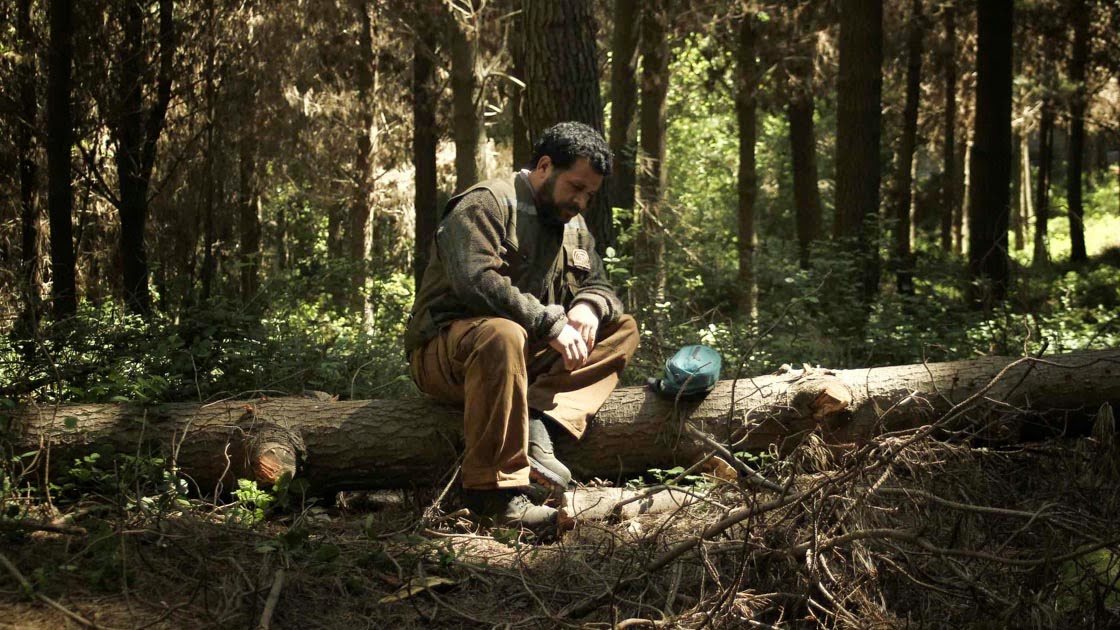
Showing posts with label Foreign. Show all posts

Thursday, July 10, 2014

Tentacles (1977): Jaws vs Giant Octopus

Tentacles (1977)
dir: Ovidio G Assonitis

Italy in the 1970s and 1980s were all about churning out cheap rip-offs of American blockbusters trying to capitalize on the latest thing. When Jaws became the latest American blockbuster, filmmakers everywhere saw it and said, "We can do that, only cheaper!" In some cases, it turned out amazing, as with the Roger Corman-produced, Joe Dante-directed, and partially John Sayles-written Piranha, which is all about a summer resort town where the river has been invaded by man-eating fish. It had style, panache, and a sense of humor and pacing, all of which Jaws lacks in spades.

Then, you have Tentacles, a sort of "what was anybody thinking?" get rich quick Italian import that rips off Jaws beat for beat, but the pure insanity of the film keeps it entertaining.

Tentacles focuses on the summer resort town of Ocean Beach, where several people turned up missing in short order, and then being found in the water frequently skinned and dead. Right off the bat, you know you're in for a special movie, because Tentacles wastes no time in dispensing characters. The first victim is a baby in a stroller, who is mainly referred to as "The Little Fatso" by his mother's friend. His mother leaves him in a stroller on the edge of the cliff next to the ocean, when he disappears. The next victim is a salty sea captain with a wooden leg, who also has fat jokes aimed at him.

Then, we get to the real stars of the movie, John Huston and Shelley Winters. They play as a brother/sister pair who seems to be way too salty and quasi-incestuous. Winters is a complete alcoholic, making drinks as soon as she gets up, while Huston calls her a fat slut in so many words. Huston's main story is that he is a reporter investigating the deaths and suspects they have something to do with nearby construction work. While Winters' main job is to drunkenly take her and her neighbor's kids around town and get them entered in the sailing contest, where surely somebody will die.

I can't tell if Winters is just playing drunk or is actually soused in her scenes, which includes a general lack of volume control, and constant one-upmanship of her kids. During the first day's events, she wears the most obscenely gigantic sombrero while she forgets her kid's name, and then complains that she spends too much money on the children while downing yet another drink. By the time she tells her neighbor that the kids want to be in the race, the neighbor says she trusts Winters, and you have to wonder who in their right mind would trust their kid to an alcoholic with vodka on her breath.

Huston gets off a little better, playing the saltiest reporter to get to the bottom of the story. Along the way, he meets with business men, but also an orca trainer who really cares about his Orcas. I mean, REALLY CARES about the orcas. Like, tearjerkingly cares.

Of course, it all ends in a gigantic orca fight with a giant octopus. This being Italy in the 1970s, they didn't really care too much about animal well-being, and so it seems they ripped apart a real octopus, who may have been living when it was ripped to pieces by the orca puppets. Which may be a bit nauseating to more sensitive viewers (far more than the off-screen murder of The Little Fatso in the stroller).

If we can forgive that bit, however, there are many treasures in Tentacles to be found. The awkward dialogue. The giant sombrero. Walkie Talkies that irritate the octopus. A constant barrage of fat jokes aimed at everybody because they're fat Americans (HA HA). Corpses who float feet up. Dead fish who sink face down. It's all so ludicrous that one can't help but be entertained. Tentacles isn't a good movie, but it's a great bad movie. And, it's a much more entertaining movie than Jaws would ever be. Jaws wishes it were this interesting.

Monday, July 7, 2014

The Dance of Reality (2013): Exorcising Demons on Screen (Fiction)

The Dance of Reality (2013)
dir: Alejandro Jodorowsky

Jodorowsky is constantly exorcising demons through film, but never has it been more explicitly laid out as in the semi-autobiographical The Dance of Reality.

In The Dance of Reality, Jodorowsky documents his childhood growing up as the son of Russian Jewish Communists in Catholic Fascist Chile under the rule of then-dictator Ibanez. Or, rather the film is more about what it felt like to be a kid growing up under those circumstances. But, more than conquering the societal differences, Jodorowsky is commenting on what it was like growing up with an unemotional brute of a father who believed he could toughen his son through emotional and physical abuse.

The two central characters are Jodorowsky as a young boy and his father Jaime (played by Jodorowsky's son, Brontis). Jaime is a store owner, a fire fighter, and a card-carrying Communist who also believes that men should be men, and that teaching Alejandro to be stoic in the face of pain and suffering, then Alejandro will be more of a man. Early in the film, Jaime smacks Alejandro so hard, he breaks a tooth. When Alejandro has to go to the dentist, Jaime forces him to not take anesthesia as the pain makes him tougher. But, the child is not without emotional support. He gives himself a coddling mother who speaks only through opera. And, as a directorial conceit, Alejandro stars as himself standing behind his child avatar, telling him things about the future and offering support to his then-self. It's like those exercises where you write a letter to your child self.

This is the first Jodorowsky which has a directly identifiable major influence, namely that of Fellini's Amarcord, right down to the affinity for gigantic breasts (Alejandro's mom is remarkably well endowed), and bizarre sexuality. A major scene has Jodorowsky being invited into a young circle jerk, but then being rejected because he has been circumcised, while the other boys had not. Another is when he and his mother strips and cover themselves in shoe polish while chasing each other around the room. Clearly, Jodorowsky is exorcising some deep demons through this film.

The Dance of Reality is in part how he remembered childhood, and in part how he wished childhood actually was. He completely removes his older sister from the picture, explores Oedipal fantasies, and also sends his father on a third act journey to try to kill Ibanez, resulting in him being brutally tortured for no real reason and then coming back home broken and contrite. This blends seamlessly with Jodorowsky's usual heightened visuals and overloaded symbolism where the fantasias are filmed with the same surrealism as the realistic portions.

While Alejandro isn't explicit about which parts are real and which parts are fantasias, this is the first time he actually comes right out and explains what he means with his symbolism. Where Jodorowsky used to be content to give just a handful of dialogue that explains what's on screen, here he's spelling everything out through the dialogue. One representative scene is when a spiritualist gives Alejandro a metal symbol from the Christian, Jewish, and Muslim religions, and then explains that each symbol represents the same God...but then Alejandro's father flushes them down the toilet telling him that God doesn't exist. Because this film is more about exorcising personal demons than exploring universal ideas, it is a little forgivable, but it's still the most spelled out movie of his career.

Because of the digital, and the leaning on Amarcord, Jodorowsky's warped fantasies also are less absurdist or surreal than what he used to lead us to. His visual composition is still as stunning as ever, but has now become bolder and more saturated than in films past. However, gone are the strange imagery of potato Jesus statues or church bloodbaths. The medium didn't allow the pervasive strangeness of Jodorowsky's oeuvre.

In the end, The Dance of Reality is more like Jodorowsky lite. He's more interested in exploring his personal past than exploring universal ideas or even general history. If the symbolism gets too strong, he's always around to explain what's happening, and we don't have to work for anything in the film. At 135 minutes, it also feels a little long in the tooth. Despite the flaws of The Dance of Reality, Jodorowsky lite is still more entertaining and interesting than most mainstream films, and it's still highly recommended. It's Jodorowsky at his most accessible, and should be a good starting point if you've never experienced him before.

Friday, July 4, 2014

Manuscripts Don't Burn (2014): Scathing on the Fly

Manuscripts Don't Burn (2014)
dir: Mohammad Rasoulof

SIFF 2014 Film #29

In 2011, Mohammad Rasolulof, an already accomplished director, was arrested and had a 20-year ban from making any films imposed on him by the Iranian government. In secret, Rasoulof broke that government-ban and made Manuscripts Don't Burn, a film which is an indictment of the Iranian government, and it's attempts at intellectual censorship. The end result is a harrowing indictment of not only censorship but also cultural manipulation and how the whole system is set up against everybody's best interest.

The main characters of Manuscripts are not the intellectuals, but a pair of Iranian government assassins who are chasing after a manuscript. The assassins aren't rich or even paid all that well, as one of the two assassins has a sick child who is trying to gain admission to a hospital, but he doesn't have the money to pay for the stay. The assassin is constantly calling their government bosses to try to get the finances transferred to his account so he can prove he can afford for his son to have whatever surgery is needed.

The manuscript is written by a wheelchair-bound intellectual poet who had written a book that was essentially an anti-government screed that had over 100 instances of censorship inflicted upon it. One of the major instances is a story about a group of poets on a bus trip to Armenia, which was supposed to be driven off a cliff in the middle of the night. They intervened and survived, but were warned to be silent about it. The uncensored manuscript is put to a small circle of intellectuals for safe keeping, and the Iranian government is trying to keep it repressed.

The saying of "Manuscripts don't burn" means, essentially, that while the government can censor all they want, they actually don't have the power to remove memories. Until they do. The assassins aren't just going to destroy the manuscripts, but destroy all of the memories of the manuscript from those who have read it, wrote it, and remember it. At this point in their career, murder and death are second nature to the assassins. They even delude themselves to the reasoning they kill, with the father of the sick child questioning whether he's actually doing a good service, or if he's just doing something more immoral.

While the general frame of Manuscripts Don't Burn is a traditional assassin story, the details and the government prescience adds a presence that otherwise would be absent in this rather slow and pondering execution of the usual story. The ponderings of religion and God, and the intersection of religion and government, duty and manipulation of the poor, plus the responsibilities of rebels to try to promote the truth in a lying government, makes Manuscripts more detailed and pointed than the usual generic stories we get.

Rasoulof filmed Manuscripts in secret, and even eliminated all names except his own from the credits. The cast and crew have gone unnamed in the movie in order to prevent them from legal action by the government. But, the secrecy shows. There are some questionable filming choices that seem more rudimentary than thought out, and the pacing is a little erratic even in its heavily plodding pace. However, given the circumstances, one can forgive those technical details over the thoughtful content within the film itself.

Manuscripts Don't Burn isn't an "enjoyable" experience. But, not all cinema should be enjoyable. They should be thought provoking, and Manuscripts Don't Burn has that in spades. Being an anti-government screed, Manuscripts is an important movie, even if it isn't technically amazing.

Thursday, July 3, 2014

La Mia Classe (2013): Going Meta-Overboard

La Mia Classe (2013)
(aka My Class)
dir: Daniele Gaglianone

One of my traditionally favorite formulas is the story by proxy formula. In this formula, it's generally a group setting, and in one remote location. The story, we learn, is happening off stage, and we're learning about it piece by piece through the dialogue only. Generally, this works best on radio or on stage, and it helps to have only a handful of stories progressing at any one point. But, the action only sometimes interrupts the on-stage/screen action, with most climaxes happening off screen as well.

This formula must fascinate Gaglianone as well, as La Mia Classe uses the formula, then makes meta-commentary on the meta-formula, thus making everything meta squared.

Gaglianone is tackling some heavy, hefty, issues with La Mia Classe that affect a broad range of people, namely that of immigration and treatment of immigrants in the country of Italy. He sets La Mia Classe as a cinema verite style peek inside an Italian as Second Language class for immigrants. He fills the classroom with a wide variety of immigrants from a variety of places - Egypt, India, Libya, etc - and with a variety of reasons for not wanting to remain in their own country: money problems, cultural pressures, etc. Through the language exercises, we learn what these situations are, and the struggles that happens because of their being an immigrant.

But, Gaglianone also poses La Mia Classe as a documentary about the making of the narrative feature La Mia Classe and also a behind the scenes of the making of that documentary. He opens the film with the students testing their various microphones before the shooting is supposed to begin. But, before that, we explore the halls of an empty school into an empty room, as if the class had happened long ago in a different time period. At one point in the film, a student walks up to the teacher saying he has problems with his residential status papers, but then at another point, a student walks up to a producer with the same problems creating a hullabaloo. At yet another point, the film is documenting the setting up of a shot for a student to sleep in a park, and then filming the sleeping in the park.

Gaglianone goes overly meta to get the point across that this isn't your traditional poor weepy, but this stuff actually happens, but he loses the point of going meta by making his meta narrative kind of wishy-washy in its status as a non-fiction fictional narrative, and thus making everything seem faker and less urgent than it may actually be in that country.As a counter-example, Interior. Leather Bar. is a meta-narrative where the whole thing is scripted, but it's scripted as if it is a documentary, and doesn't half-ass or confuse any of the scenes. Thus, the scenes in Interior. Leather Bar. while climbing up its own ass still, seem more real than the scenes in La Mia Classe.

The missed opportunity is great here, because when La Mia Classe is on, it's really on. And, when it's off, it's really off. It's a point blank disappointment that's greater because it was reaching for the stars and burnt out before it reached it's destination. The acting didn't help because most of the students seemed to be able to speak Italian with great ease, and the mistakes also seemed scripted. But, what do I know? It's not my language. Nor my country.

Friday, June 27, 2014

Wetlands (2014): Women can be vulgar too

Wetlands (2014)
(aka Feuchtgebiete)
dir: David Wnendt

SIFF 2014: Film #24

Wetlands is about to change a game. One of the major complaints is that there aren't enough (read, virtually any) female-driven gross out comedies. These comedies have generally been the realm of men, and delegated to phallo-centric film making. And, when women try to get in on the game, frequently they turn out either polarizing (Dirty Love), too sensitive (Bridesmaids), or too immoral (Bachelorette). Finally, I think the blend is just right for a completely unabashedly vulgar teen gross out sex comedy that's also female driven.

Wetlands, referring to a woman's vagina, centers on Helen, a just over teenage girl who also has hemorrhoids. How do we know she has hemorrhoids? She tells us in the opening scene as she's skateboarding barefoot. Then, she walks, barefoot, into the most disgusting public toilet in all of Germany, that's got 2" of standing water in it, where she proceeds to put hemorrhoid cream in her anus. After which, she spots a dry urine stain on the toilet rim, and we zoom into the public hair going into a microbial representation of the hair as the title credits play.

The most disgusting public toilet in Germany visually has a direct recollection of Trainspotting's most disgusting toilet, intentionally. The surreality of Trainspotting is a heavy influence in this film about a teenager trying to conquer her ass problems via surgery while also trying to pick up her hot male nurse and get her parents back together. Wetlands isn't linear, straight-forward, or polite, frequently covered in bodily fluids of all kinds, both male and female. Nothing is taboo in this call for Helen to fully embrace her body and her sexuality.

Wetlands sees the line it shouldn't cross, and gleefully runs past it at rocket speed and ends up about 20 miles away from it. Right from the start, it doesn't want to be polite, and it's punk girl aesthetic informs you that this isn't your "I'm going to be a polite, behaved woman" type comedy. Helen doesn't care about societal norms, and instead goes after what she wants. Indeed, the male nurse she unabashedly seduces is treated as a trophy that is torn between Helen and his kinda-ex-girlefriend Valery, a student doctor in the same hospital. Wetlands is a girl power film in the full sense of embracing a previously male-dominated genre.

While Wetlands is hilarious and crude, like the best gross out films, it actually has a heart to make you care about the story behind all the gross out gags. Not only does it show you a finger going into a butt, it makes you care about the person who possesses that butt. Helen comes off as a crude, slightly confused teenager who needs to figure things out, and needs somebody to love. Everything she says is meant to provoke a reaction in all of her audiences, on screen and off. Wnendt makes sure that we don't think that Helen is a completely immoral degenerate, but merely a girl who needs to provoke her way through to maturity.

I've been waiting for Wetlands for ages. I have been wanting a female-driven gross out that's hilarious, takes-no-prisoners, and doesn't care about being polite about anything. Helen never apologizes for being who she is, and neither does the film. Which is exactly the type of entitlement that is endearing in male gross out comedies. Helen is a perfect gross out character, and Wetlands is an exemplary insertion in this genre.

Wednesday, June 25, 2014

Long Distance (2014): The Illusion of Closeness

Long Distance (2014)
(aka 10.000 km)
dir: Carlos Marques-Marcet

SIFF 2014 Film #22

Maybe you've been in a relationship where one side had to go abroad for a year. Maybe you know somebody who has. Most proponents of temporarily long-term long-distance separations frequently say that with the new technology, it will almost be like living with your significant other. You can Skype across the world for next to nothing, and stay intimate via cyber sex. You can talk on the phone, text, e-mail, send photos, converse...it'll be like living at home!

Carlos Marques-Marcet's cinematic debut closely examines the claims that a relationship will be able to sustain the same intimacy over a long period separation. Sergei is a student who is hoping to become a teacher in Barcelona. Alexandra is a photographer who was chosen for a year-long residency in Los Angeles. We meet Sergei and Alex in an opening 17-minute single shot of a morning in Barcelona, where they discuss having a baby before Alex discovers she was selected for Los Angeles. The camera captures the intimacy and familiarity of the couple as they wake up and perform their routines together, as their harmony is never broken up by the force of the editing.

The remaining 90 minutes is following the couple as they cling to each other, and then start to discover life outside each other until life apart has changed them in ways to the point where communication is more difficult than ever. Sergei and Alex believe that the modern wonders of the world - Phone, Texting, Facebook, Skype - will keep them close to each other, and that their relationship can sustain the long-term absence. Marques-Marcet denotes each subsequent scene with the number of days into the separation they are, constantly making us aware of the toll that time takes, even when technology is presenting the illusion of closeness.

To tie in the message of technology being illusory, Alex's project is all about the presence of technology in life. She begins by taking photos of hidden antennae in plain sight, such as in elephant statues. Later, she moves on to a more obvious comparison when she films car rides through city streets, and places them side by side with Google Maps going through the same path, hammering home the point that technology brings us the illusion of being worldly, but it really is all fake.

Sergei and Alex are but mere ciphers for the audience. Marques-Marcet doesn't put much to their character beyond their history together and their career ambitions. Sergei's big dominant characteristic is that he's a Spanish man who has a little bit of a machismo issue, where he dreams that his career is the most important. Alex is a modern woman striving to live her own life and have her own career. Beyond that, we learn little about these characters, and that's almost the point. Technology has a similar effect on all relationships, when we can leave the screen and be absent at our leisure. When we can edit and re-edit e-mails instead of speaking from the heart.

While Long Distance may be working in broader strokes than a movie about a specific relationship, it's important to realize that it's not really about this specific couple. Marques-Marcet is more interested in how technology affects us, and how it deceives us. If you let it, Long Distance will make you question your own reactions, and you will look at whether their reactions will be similar to your own. Or, maybe you'll have a different response. Maybe you'll be frustrated at one character or the other. But, Long Distance is full of questions and insights that I haven't seen tackled yet. Original, dramatic, and entertaining, Long Distance captures what technology actually represents.

Monday, June 23, 2014

The Circle (2014): The History of Gay, Swiss Edition

The Circle (2014)
(aka Der Kreis)
dir: Stefan Haupt

SIFF 2014 Film #20

I'm guilty of being America-centric when it comes to my knowledge of gay history. I know a lot about the history of being gay in America, including pre-Stonewall, and I know about Germany's infamous Paragraph 175 (which has a good documentary, btw). But, I had never heard about Der Kreis (The Circle), a magazine of gay fiction/erotica and photography that also served as a communication underground.

In Switzerland, being gay wasn't illegal. But, it was still frowned upon. Being outed as a homosexual could end your career, and also bring around harassment. But, still, one could distribute material in plain brown envelopes, as long as it passed the censors, and one could throw big gay balls that were seasonal gay megaparties.

To give the history of The Circle a human element, and also to demonstrate how this is not the complete story, Haupt infused the movie with a romance between two men, Rapp and Ostertag, who met at a ball one night, where Rapp was performing as a drag queen. They fell in love, and their relationship sustained the years as they're the characters telling the story in modern times.

Haupt made The Circle with a structure of blending docudrama recreations and actual modern day interviews of Rapp and Ostertag, filling in some of the holes with other interviews of journalists, family members and ex lovers of people who were part of The Circle. The recreations take up the bulk of the film, but the interviews are fascinating, especially since Rapp and Ostertag are two of the cutest 80-year-old gay men you could ever meet.

The Circle goes through the full story of The Circle, from how it was started all the way through how it was destroyed by constant harassment from the police after a series of murders rocked the gay community. While there is probably a certain amount of dramatic license taken, Haupt wisely uses the interviews to keep the maudlin dramatics grounded in reality. There are police beatings, and suicides, and harassment, all of which are representative of larger movements in the gay lifestyle at the time.

The balance between the modern talking heads and the maudlin dramatics really gives The Circle a freshness that few docudramas and period pieces have ever reached. The importance of The Circle is highlighted by the tale of survival of the two talking heads. The weight of the situation is balanced by the sweetness. But, really, the interview/re-enactment format is taken to new levels in The Circle, feeling like the an answer to the new dilemma of Fact/Fiction/Faction in the documentary genre.

Friday, June 20, 2014

Boys (2014): Yet Another Coming Of Age Gay Film

Note the shallow depth of field, and the out of focus trees.
Boys (2014)
(aka Jongens)
dir: Mischa Kamp

SIFF 2014 Film #19

I know I was just complaining about The Way He Looks for falling into the cliche traps of all the coming-of-age, coming-out gay teen movies, but Boys makes that movie seem like a masterpiece.

Boys is a new coming-out film from the Netherlands where the defining characteristic of the central boy is he's a track star. Sieger, the 15-year-old track star, gets promoted to the next level of track with his friend Stef. While competing on that level, he meets Marc, a boy who seems to be a little more free and is already accepting of his gay status. Marc and Sieger start a covert relationship, while Sieger struggles between his gay identity and his hetero identity, having a new girlfriend Jessica, whose friend Kim is dating Stef. Torn between Jessica and Marc, Sieger must confront his new found sexuality.

Since that's about enough of a plot for a 30 minute after school special, Boys adds in the extra complication of Eddy, Sieger's rebellious older brother. Eddy likes to ride a moped, though his father has forbidden it for some reason. Eddy also has problems at the lumber mill, and does all sorts of rebellious behaviors.

Mischa Kamp fills Boys wall to wall with dreamily out of focus shots, slow-motion, and super closeups to pad the running time. If you want to play a deadly drinking game with Boys it's drink every time there's an extreme close-up of anything, from a hand tugging at the leg of shorts, to a shoe to two lips kissing. Extra hardcore edition is when there's a super narrow depth of field and everything outside of the focus is blurry and stylish. This is the new status quo and I am now really tired of it. It kind of fits the overly sweet and shallow topic matter of Boys, but it's so overused here that it becomes ridiculous.

Not to mention, Eddy's story line makes absolutely no sense. The final scene with Eddy is completely dumb. And, this is the second movie with a scene which shows gay boys bonding by tandem riding bikes, standing one behind the other. The other one being The Way He Looks. No, I'm not making that up. It just shows how generic these two movies actually are.

There is absolutely no intentional humor in Boys. Unlike The Way He Looks, Boys doesn't regard being a teen as fun, but as a series of emotionally sweet scenes which are all out of a melodrama with no humor injected into them. These boys barely laugh in this film. It's all smiles and furtive looks. It's just such a serious drama.

As mentioned in the review for The Way He Looks, Boys utilizes the new trope of not actually telling the parents that you're gay. Which is more fucked up here than in The Way He Looks because Sieger actually pussyfoots his gay identity around his father and brother, and that coming out isn't regarded as important even though the father figures heavily into the film

Boys is a pretty but shallow film about another teenager discovering his sexuality. There is no best female friend in this movie (surprise!), and the boy seems overly normal and rather sporty. Which is nice for a change. But, it's just so dry and cliche that these new innovations pale in comparison to the downfalls of the rest of the movie. Skip it.

Thursday, June 19, 2014

Palestine Stereo (2013): Subverting Politics

Palestine Stereo (2013)
dir: Rashid Masarawi

SIFF 2014 Film #18

Palestine Stereo is a light-hearted episodic comedy about living under Israeli Occupation, using the episodic comedy as a vehicle to communicate the various absurdities of Palestian life and easy-to-swallow messages of Pro-Palestinan morality. Masarawi has turned down the irony to make a film that is more directly piercing, almost to the point of being heavy handed, and made a film that lightly documents the injustices of occupation.

Samy and Stereo are the movie's central characters who are trying to escape Palestine in order to seek asylum and a life of sanity in Canada. Stereo's apartment, pre-film, had been bombed by Israeli forces while he was out singing at a wedding, and while Samy was there to fix the electrical. The bombing killed Stereo's wife, and left Samy deaf and mute, a pointed allegory for how Israeli occupation strives to if not destroy Palestine, then keep it from communicating effectively with the outside world. Devastated by the disaster, the sane decision is to flee Palestine and go live among the calm. But, Samy's fiancee, representing the call of the Palestinian nation, tries to keep Samy from fleeing to Canada, saying essentially that fleeing is a cowardly act.

However, Samy and Stereo need to have $10,000 in a bank before they can be approved for Canadian citizenship. Their scheme is to buy a shoddy ex-ambulance that's been riddled with bullet holes, and borrow a stereo setup in order to make the money so they can leave. This allows them to go around Palestine setting up audio equipment everywhere it is needed. They go to protest rallies against Israeli occupation when the occupation moves to bulldoze olive trees or other such movements. They go to political conferences and rallies where the politicians make the same pro-Palestine speeches over and over and over again to the point that Stereo knows what they're going to say. They go to weddings and celebrations. It's all a documentation of the variety of life under occupation.

Though Palestine Stereo is a bit direct, it's easy-to-swallow capsule makes the direct messaging go down smoothly. It's a political allegory through and through, while also noting the various absurdities that Masarawi perceives to be part of life in general. Religion is blind while Palestine is deaf and mute. And, Stereo is our observer of all of this.

Masarawi's light comedy touch to even the heavily political scenarios makes Palestine Stereo a required viewing to see the dissection of Palestinian politics in a way that both indirectly challenges its own government while also challenging the occupation while also dealing in its own sloganeering. It's clever in the way it masks its intent in order to deliver a message that might be considered unpopular or even criminal.

Friday, June 13, 2014

Dead Snow 2: Red Vs Dead (2014): Nazi Zombies - Excessive Edition

Dead Snow 2: Red Vs Dead
dir: Tommy Wirkola

SIFF 2014 Film #14

Dead Snow 2: Red Vs Dead is the sequel to the Nazi zombie cabin-in-the-woods horror comedy out of Scandanavia. Dead Snow was a clever meta take on the genre, which poked loving fun at the cabin in the woods formulas as well as the zombie formula, all the while maximizing the horror, the comedy and the gore. Dead Snow was clever, hilarious, and witty, especially since it came before Cabin in the Woods (unlike Zombeavers).

Dead Snow 2: Red Vs Dead smartly abandons everything that made Dead Snow what it was. A straight continuation from the final moments of Dead Snow, Dead Snow 2 moves out of the mountains and into the lowlands. The lone survivor, Martin, now down one arm, is chased by the Nazi zombies who cling to his car. But, because he had a spare coin in his pocket, they come after him again. And, in a series of incidents, Herzog (the lead Nazi) also loses his right arm, before Martin's car goes flying off a cliff into the hinterlands.

The hospital that found Martin attached Herzog's arm to Martin, and Herzog attached Martin’s severed arm, thus forming the basis for the feud. With Herzog's zombie arm, Martin achieves zombie super strength, and both have the ability to resurrect dead people to form zombie armies. To further complicate matters, Martin is joined by the Zombie Squad, a group of adult geeks whose whole life is wrapped up in the zombie culture, and they desire to kill zombies.

Herzog had initially been on a task from Hitler to take over a town, now is going to finish up his mission and march on the town again. Stopping by a museum to grab a tank and some weapons, he continues on his march. Martin, however, also hit the museum, and decides to resurrect Russians to combat the Nazis, thus recreating WWII in zombie terms. You have the Americans, you have the Russians, the locals, and the Nazis.

The wit in Dead Snow 2 isn't in the reuse or meta parody of horror or horror comedy tropes. The wit stems from Dead Snow 2’s willingness to go as far as possible as frequently as possible. There are instances of comedic cruelty to zombies, and the violence and gore factor of Dead Snow 2 is constantly as far over the top as you can imagine. From dead kids to smashed heads to intestines a plenty, Dead Snow 2 never says no to a drop of blood in the film.

Coming in at 100 minutes, Dead Snow 2 doesn't feel bloated at all. Just about the time you’re wanting the final battle to kick in, the final battle does kick in. The developments and pacing come in swift, and Dead Snow 2 feels more like an ode to Peter Jackson originality than Sam Raimi parody. Dead Snow 2 has more in common with Dead Alive than with Evil Dead, even keeping the sardonic cruel wit that Peter Jackson brought to his early work.

Dead Snow 2 isn't a dumb movie. It’s smart and witty and trashy and just about the perfect midnight movie. It doesn't run too long. It doesn't let its pacing drag, keeping the audience from falling asleep. The violence and gore factor are over the top. It's quite brilliant in how clever it actually is.

Required Viewing.

Thursday, June 12, 2014

The Way He Looks (2014): A Blind Coming Out Story

The Way He Looks (2014)
dir: Daniel Ribiero

SIFF 2014 Film #13

I am so fucking sick of coming-of-age LGBTQ films where nobody is really evil, and all the tension is from coming out of the closet and getting your first boyfriend. I realize that this is a legitimate genre, and needs to be updated for every generation that comes of age, but…goddammit, I am so fucking sick of it. It’s my problem, and it’s not the fault of any specific movie, but if I never see another teenager struggle for their freedom while also coming out of the closet, I’ll be a happy happy faggot.

The Way He Looks adds in the complication of the main teenager, Leo, being blind and thus giving him overprotective parents who seek to protect him given his disability. But, otherwise it runs through the usual gay teenage tropes. It gives him his teenage female best friend, who kind of has an unrequited crush on him. It gives him a new interloper best friend, whom he is intended to fall in love with. It gives him the bullies who make fun of him and call him gay before he even comes out. It gives him a desire to escape the town he lives in. It’s all so…done.

That being said, The Way He Looks isn’t BAD so much as it is TIRED. If you’ve seen the usual coming-of-age stories, then The Way He Looks will hold no surprises. The best scene is the mid-credits tag that has nothing to do with anything. The second best scene is Leo learning how to shave from his father, as his father talks with him about a student exchange program.

The Way He Looks isn’t poorly constructed either. It has the semi-soft, twee, limited-palette, limited focus dreamy look that so many indie movies have had in recent years. That look is fine, if you’re into that, but I’m starting to get tired of it after seeing so many many movies look so so similar. They’re all looking at sweet emotions that are just so touching.

Basically, The Way He Looks has come up too late in many of the tropes it puts out. It’s not bad, if you’re wanting another gay teenage coming of age story, only with no real rebellion. The worst thing that Leo does is sneak out at night to look at an eclipse. Or, maybe it’s drinking a whole bunch of vodka and then going swimming on a class camping trip. But, the rebellion isn’t really all that rebellious. The closest to an actual negative emotion you feel for any of the characters is frustration at their inability to communicate.

The Way He Looks has an interesting point of view in that neither Leo nor his object of affection are really conflicted about their sexuality, but more conflicted about the outside acceptance. Much of the tension comes over whether each of them wants to risk queering their friendship for the risk of dating each other, rather than "I can't <b>REALLY</b> be gay, can I?" and also rather than most of it coming from the bullies or the parents.

There is a new trope that is coming around in the coming out movie where the kid doesn't actually come out to his parents. In both this, and the 2014 Netherlands film <i>Boys</i>, the central figure comes out to maybe 2 friends, but never confronts his parents. There is no blessed acceptance, nor a fiery condemnation. That situation is never resolved in either film, creating the one new trope in modern gay film.

If you want an easy going non-descript coming-of-age story out of Portugal with skinny boys who get naked once or twice, then you’ll probably love The Way He Looks. It’s probably the perfect film during which you could make out (or more) with your boyfriend. But, if you’ve seen all of the coming of age stories, and are looking for a new twist on the genre, or something that maybe even reflects how the youth of today actually looks at the world, then skip it.

Tuesday, June 10, 2014

Pierrot Lunaire (2014): A Woman Playing A Man Playing A Woman Playing A Man

Pierrot Lunaire (2014)
dir: Bruce LaBruce

SIFF 2014 Film #11
(Best of Festival)

Pierrot Lunaire is the Bruce LaBruce that you’ve come to know, expect, and love. But, it’s not mere political statement with hardcore sexuality. Pierrot Lunaire is a full frontal assault on your sensabilities that doesn’t ever let you get comfortable as you’re watching for its full 51 minute run time.

Did I just say 51 minutes? Yes I did. Being under an hour, Pierrot Lunaire barely counts as a film in length, but starts addressing so many different ideas in those 51 minutes that you can’t call it anything but. By the time, Pierre Lunaire is over, the audience will be overstimulated and exhausted.

Pierrot Lunaire is originally a series of 50 French poems by Albert Giraud published in 1884. These poems were translated into the German by Erich Hartleben. In 1912, Arnold Shoenberg created Three Times Seven Poems from Albert Giraud’s “Pierrot Lunaire”, an atonal musical “melodrama” that used speech-singing and a minimal chamber-esque group of musicians. And, finally, Bruce LaBruce decided to completely subvert that whole work in this short-ish film, which uses the Shoenberg work as his foundation, in as much as a subversive work can be further subverted.

Bruce LaBruce reimagined the main character, Pierrot, as a transsexual, a woman pretending to be a man. I say pretending because it's unclear if Pierrot identifies as a woman but dresses as a man because lesbians were generally not accepted, or if Pierrot truly identifies as a man.  Pierrot has a female lover, Columbine, who believes that Pierrot is a man. When Pierrot meets Columbine’s patrician father, the father figures out that Pierrot is a girl posing as a man, and prevents them from seeing each other. As a result, Pierrot embarks on a journey to covet and gain a real live penis for himself.

LaBruce tells the story in a manner similar to the intent of the original stagings of the play. The film is divided into the 21 different poems, each with a title. Each section of 7 poems are divided by modern old school club techno that sounds straight out of a German leather bar. In addition, LaBruce tells the story of Pierrot in two different stagings that he edits together: a cabaret-esque live stage staging, and a traditionally cinematic staging. LaBruce uses a variety of silent film techniques (a la Guy Madden) to pull all of the sections into a semi-cohesive whole, and even has title cards detailing the action on screen, while the poems undercut the action of the film because they have little to do with the onscreen action…or maybe they have everything to do with the action. I'm not entirely sure.

To say that I fully understand Pierrot Lunaire after a single screening would be to lie. This is a film that assaults you on multiple fronts. The music is old-school atonal classical with multi-chromatic poems being read/sang in a variety of tones that ranges from whispering to shrieking. The aural sensibilities never get adjusted from the deep bass of the techno that opens to the atonal apocalypse of the main music. Then trying to process the music and the poems with the multi-level on-screen action, plus having silent-film title cards. It’s a crime on your brain.

For me, Pierrot Lunaire will probably stand up on rewatches. Or, it may possibly fall apart under its own pretension. I don’t know. I know that I will enjoy figuring out what it means. It’s a puzzle box of an arthouse film. I’m not sure if LaBruce is saying something vast about gender, or just fucking with us (are we ever sure of that?). Even if this movie is all style with little substance, it will still be fun as hell to watch and rewatch.

Best of Festival.

Monday, June 9, 2014

To Kill A Man (2014): Responsibility and Latin Masculinity

To Kill A Man (2014)
dir: Alejandro Fernandez Almendras

SIFF 2014 Film #10

The intersection of masculinity, violence, ego, and protection has been a topic covered for years in cinema. Sam Peckinpah’s 1971 classic Straw Dogs, for example, examines what happens when a wimpy rich guy moves with his wife into his wife’s family's old house in the country, and then is confronted by the countrymen who seek to challenge his masculinity to his breaking point. This was revisited in 2003’s Cold Creek Manor, and again in the remake of Straw Dogs.

Chile finally made its own edition of this formula, adding the Latin culture view of masculinity into the mix. To Kill A Man examines what happens when an educated but effete working man is incessantly harassed by a poor gangster living in the projects. Jorge, the working man, is a researcher in the Santa Julia Research Forest. He takes the bus to work, he is married with 2 teenage kids, a son and daughter, lives in a modest house. He is surviving, but isn't exactly rich. On his way home, after picking up a cake for Jorgeito's 18th birthday, he is harassed by a gang of low-level street hoodlums led by Kalule. When he goes back out to pick up some alcohol for the party, he’s essentially mugged by the group who even stoop to taking his diabetic kit!

This is just another step in an ongoing feud, but one that starts to have serious consequences as Jorgeito mans up and goes to confront Kalule. Kalule shoots Jorgeito. As a result of everything, Jorge’s wife demands a divorce, and when Kalule is released, he’s out for revenge.

To Kill a Man asks a more unique question than the previous films. To Kill A Man asks how far do things have to go before it is OK to take the law into your own hands. Unlike most of the films of this ilk, the police start on the side of Jorge. Jailing and imprisoning Kalule. But, when the feud heats back up, the police start to act more and more impotent, for some reason. Despite the family having a protective order, the police don't arrest Kalule for any of the harassing incidents that he perpetuates.  Marta, Jorge’s wife, berates Jorge for not being able to protect his family when their daughter ends up in the hospital. And, so…what does a man do?

Even though this move is full of clichés, it at least runs through them at a very clipping pace, running only a short 82 minutes. There’s little bloat here, instead leaving most of the movie to the main scenes and keeping the scene lengths to be long enough to hold the emotions of the movie. A longer movie would have dragged its ass to a sluggish pace, especially since the way through the movie is fairly well-trodden up until the final 15 minutes.

The final 15 minutes bring up a topic that isn't really addressed in any of the other movies: Responsibility. I’m not going to tell you what happens, but at what point is a person responsible for their actions? What is permissible, and how does conscience figure in? To Kill a Man does manage to ask these questions, even if it doesn't answer them for you personally. The sign of an interesting movie is that it asks you to think what you would do, but doesn't pass any of the moral judgments about your decisions, instead asking you to make them for the movie. It points you to various possibilities but doesn’t say which is right or wrong.

Holding To Kill a Man back from greatness or significance is a pedestrian style it thinks is a conscious choice. It feels like the post-Traffic Mexican films of the 00s, full of browns and greens without a full color palette, and full of seemingly boring cinematography. This is a shame because the movie itself is full of interesting ideas and acting, even if it runs though clichés. It’s a movie that deserves better than the visuals it is given.

Thursday, June 5, 2014

The Strange Colour of Your Body's Tears (2013): Avant Garde Giallo

The Strange Colour of Your Body’s Tears (2013)
dir: Helene Cattet, Bruno Forzani

SIFF 2014 Film #8

In the follow-up to 2009’s Amer, Helene Cattet and Bruno Forzani created another psychedelic cinescape of sensory overload. The Strange Colour of Your Body’s Tears is a 100 minute avant-garde experiment that tests the boundaries of storytelling and film itself. By using the visual and aural overload cues of 1970s giallo, Cattet and Forzani have concocted a singularly unique film.

Dan Kristenssen is returning home to his gorgeous apartment after a week away and discovers his wife has gone missing. Adding to the mystery, the door was chained from the inside. While investigating the disappearance, Dan discovers that his apartment building has plenty of mysteries and mysterious tenants.

But, besides a couple of twists that happen midway through, much of the movie’s plot and meaning is kept vague to the audience. Unlike with Amer, Cattet and Forzani aren't intent on creating a simply plotted story that captures what it means to be a young woman blossoming. This time around, they’re exploring a general Giallo-inspired plot, but the complications upon complications means that The Strange Colour remains completely vague.

Those looking for something direct or even coherent might be better served looking at different pastures. The Strange Colour isn't going to provide you any direct answers. It isn't going to give you an easy A-B-C plot that tells you something is the direct something is the direct something. It is a mood piece that intends to overpower the audience instead of making a coherent statement on its own.

However, The Strange Colour is excellent in creating atmospheres of a certain feeling. The atmosphere is moody and grotesque and psychedelic and overpowering in intensity. The overamping of sounds like leather rubbing against leather, doors creaking open, blood splattering, tile breaking, and even blades going *SHINNK* creates a sensory overload that pulls you in and pushes you out in a pulsing fashion.

The lack of coherence that's conveyed through the atmosphere does point to a certain student film-esque quality. The atmosphere for atmosphere’s sake, the sound, the cinematography and the editing are all top notch, but the lack of purpose seems so amateur. There is a drilling re-use of an S&M scene involving a knife of at least 5-6 times where you kind of get the point and nothing new is revealed in any of the later repetitions. There are spinning kaleidoscopic reflections upon reflections of stained glass windows and geometric balconies and doorways that are neat to look at, but sometimes it is little more than “Look what I can do with After Effects!!”

The Strange Colour feels less like a final film and more like an experiment that will lead to the next film in Cattet and Forzani’s career.  The film seems to be about the walls we build up between our self and our past. It explores our general abandoning of our history in order to deal better with our present. By creating the sense of horror, Cattet and Forzani have made the exploration compelling. But, without saying anything new that hasn't been said in other, more superior, films, The Strange Colour ends up being little more than a fun and amusing diversionary lark of an avant-garde film.

Thursday, May 29, 2014

Why Don't You Play in Hell? (2013): Insanity begat from previous insanity

Why Don’t You Play In Hell? (2013)
Dir: Sion Sono

SIFF 2014 Film #3

I find it hard to believe Sion Sono’s claim that Why Don’t You Play in Hell? is based on a 15-year-old screenplay, which would originate it in 1998. There are so many parts of Why Don’t You Play in Hell? that steal from other films that came in the 2000s, to the point that it’s hard to believe they weren’t influences on even the first draft.

Why Don’t You Believe in Hell? is divided into three sections: about 10 years ago, the present, and the finale. About 10 years ago, we’re introduced to The Fuck Bombers, who are a bunch of teens whose dream in life is to make movies. They film using 8mm, and happen upon a fourth friend who liked to play as the Yakuza. But, they make him into a Bruce Lee story. We’re also introduced to Mitsuko, the daughter of a major Yakuza boss, Muto. Muto has been targeted by a competing boss, but all the assassins were foiled by Muto’s wife. The wife is jailed for killing the assassins and creating chaos, while Muto kills the competing Yakuza boss, letting a younger assassin take over.

In the present, Muto is trying to get Mitsuko into the movie business, while the competition is trying to assassinate Muto (again) and The Fuck Bombers haven’t become a success, and Mitsuko runs away and gets a guy to be her pretend boyfriend for the day. All these stories interweave in a way that can easily be imagined, but is still fun to play out, and ends with an anarchic blowout that is amazing!

The main problem with Why Don’t You Play in Hell? is that it is 127 minutes long, and completely drags in the middle acts of the film. The tangles of the movie just get overbearing with scenes that ultimately don’t even matter, and the film could stand with 20-30 minutes of the movie being chopped, easily. As a 90-100 minute grindhouse explosion, this would be a blast. But, at the full 127 minutes, the movie just has too heavy a middle, and cannot sustain its established pacing.

The minor problem is that Why Don’t You Play in Hell? is a complete ode to Kill Bill and the movies of Takeshi Miike. There are fountains of blood, beheadings, dismemberment, and various other fun bits of ultraviolence. It’s very self-conscious about it too, with the score taking a lot of themes from the other movies, especially that of Santa Esmerelda’s “Don’t Let Me Be Misunderstood” which played so heavily a role in Kill Bill Vol 1. Sion Sono is doing nothing interesting with the references, and is merely stealing the scenes and themes outright.

That being said…Why Don’t You Play in Hell? is really fun when it is fun. For all it’s pacing problems, and even in spite of (or because of) the rip off elements, Sion Sono knows how to turn on the insanity and make a compelling image. His visuals are frequently stunning (even when they’re ripped off from Tarantino and Miike), and the movie is completely hilarious. It feels like a snotty punk riff on the genres which while not entirely fresh is still fun as hell.

Why Don’t You Play in Hell? is recommended for a lot of Japanese insanity reasons, but you may need to keep the fast forward button handy in order to skim past the scenes that don’t matter, of which there are plenty. In fact, just watch the opening act, and the final sequences and trust that the middle was middling.

Wednesday, May 28, 2014

The Midnight After (2013): The Best Philip K Dick Adaptation that Wasn't

The Midnight After (2013)
(aka Lost on a Red Minibus to Taipo)
dir: Fruit Chan

SIFF 2014: Film 2

This is the second film I’ve seen that came from a web story/novel, the first being the rather insane John Dies at the End, which was a novel originally published as a web serial. The Midnight After is based on a web novel by Mr. Pizza on the internet forum HKGolden. And, yes, it’s as insane and episodic as John Dies at the End.

The Midnight After is a Hong Kong take on Philip K Dick’s book Ubik, with a lot of changes. A group of 17 people on a minibus go through a tunnel late at night and end up in a world totally devoid of humans except themselves. As they realize something might be amiss, suddenly they start dying strange deaths. A lot of spoilery things happen, including a spectacular musical number set to a famous David Bowie song. But, I don’t want to give away much more than that.

Half of the fun of The Midnight After is trying to figure everything out.  But, ironically, if you find it fun, you’ll also find the final scenes incredibly frustrating. The other half of the fun is the batshit insanity that is in The Midnight After. The characters include a spiritual psychic who sells insurance, a constantly bickering married couple, a couple of young punks named Airplane and Crazy Glue, and a druggie who is constantly on cocaine. They ping off each other, come back together, and gather to meet.

I found The Midnight After to be a helluva ride. I wanted more. The ending leaves you wanting more, in fact. It’s drama and science fiction and comedy and horror and musical and everything you could ever want in a movie all thrown in for a single experience. At 120 minutes, it almost runs a little long, and to be fair the movie could have a couple of minor edits where about 5 minutes might be removable. But, to niggle on 5 minutes when the rest of the movie is just a powerhouse rocket where the pacing ebbs and flows with a psychotic mastery seems petty at best.

The Midnight After doesn’t say anything deeper about life other than “Life can move pretty fast sometimes, and if you don’t appreciate it, you might miss it” and “Be good to each other.” But, that doesn’t matter because the film is all about the experience. It’s a blast, it’s fun, it’s something rather interesting, and gives you some stuff to chew on as you’re watching, so you won’t be bored. Puzzled, sure…but who doesn’t like a good puzzle?

Tuesday, May 27, 2014

Half of a Yellow Sun (2014): A movie not made for Americans

Half of a Yellow Sun (2014)
dir: Biyi Bandele

SIFF 2014: Film 1

For those of us who are under a certain age, the Nigerian civil war is almost culturally invisible. For me, personally, I only knew about one thing in my life that was even connected to the civil war, and I didn’t even know that significance: Jello Biafra. Biafra is a very short-lived state that was formed in Nigeria, which had been arbitrarily formed by the UK around a bunch of completely unrelated tribes.

You won’t learn much of that in this movie.

Half of a Yellow Sun is a soap opera romance about narcissistic people who push the sexual revolution, set against the backdrop of the Nigerian Civil War. The novel, I am to understand, is told in a fractured non-linear timeline where there are many climaxes that happen at once, and secrets are revealed in various orders. The film is a completely linear film which linearly tells a shallow-ass story, while negating everything interesting or important.

The central characters of Half of a Yellow Sun are two sisters, Olanna and Kainene, who have just returned to Nigeria from the UK where they received their education. They are rich as their parents seem to have ownerships of companies, or something. It’s kept kind of vague. Anyways, Kainene falls in love with Robert, a currently married white man, and pursues a career as a businesswoman. She all but falls out of the movie, actually.

The actual center of Half of a Yellow Sun is Olanna, who shacks up with a revolutionary professor, Odenigbo, who came from the tribal villages. Odenigbo’s mother doesn’t approve of Olanna, and gets him drunk to sleep with his betrothed. And, then Olanna finds out and sleeps around and it’s all one big soapy mess for the first half of the film, where we watch people travel around Nigeria to deal with their family and occasionally bullshit about politics that are foreign to Americans, but will become important in the second half of the movie.

The second half of the movie is marked by a bunch of military people coming into an airport and slaughtering anybody they deem is Igbo. Igbo, which isn’t explained in the film, are a tribal people who were persecuted by various militant groups, for some reason. That reason isn’t clear in the film, so when the military comes around, it’s a huge surprise. And the second half is the family running from the militant groups intent on killing everybody and taking over the country in an effort to reunite Biafra, which had been formed out of distress, with the rest of Nigeria.

Half of a Yellow Sun is not made for Americans. The novel is Nigerian. The movie is Nigerian. It is made for Nigerians. As an American, this movie is extremely rough unless you’re intimately familiar with the politics of Nigeria, and the history of the Nigerian Civil War. Bandele doesn’t care if you don’t know what’s going on. He doesn’t hold your hand. For example, the families move around Nigeria and reference cities in Nigeria, but only give a map of Nigeria during the first travel. But, then they travel and are given generic mapless points for the cities and general north/south/east/west arrows, but are otherwise not put on the map. Nigeria isn’t a large country smaller than Alaska but larger than Texas. So, when they put cities, if you’re a Nigerian, you probably know where they are in the country, but if you’re American, you’re lost.

To dismiss a film that is made for Nigerians because I didn’t know what the fuck is going on feels extremely nationalistic. If you’re going in to Half of a Yellow Sun to learn about Nigeria and the Nigerian Civil War, you’re going to be disappointed at best. If you just like historical drama and are familiar with the political history of Nigeria, you may enjoy this. Maybe. Perhaps there are political allegories or metaphors that I am missing because I don’t know everything. Perhaps the extremely soapy drama is some sort of deeper story that directly relates to Nigeria. I don’t know.

But, the soap opera seemed shallow and trite, the characters seemed boring, and, other than Thandie Newton, Chiwetel Ejiofor, and John Boyega, the acting seemed passable at best. I was lost in the politics of the Civil War and not sure why I should be caring about these annoying people, one of whom kept being called a revolutionary. It’s because of my America-centric knowledge that I might not be appreciative of the film, but it wasn’t made for me. I feel inadequate to judge it. But, I didn’t like it.

Tuesday, May 13, 2014

Sexual Chronicles of a French Family (2012): Skinemax, French Style

Sexual Chronicles of a French Family (2012)
dir: Pascal Arnold, Jean-Marc Barr

Are you wanting an erotic film but are tired of the pornified genre crap that populates Cinemax and Showtime after 2am, but are too uptight to actually watch porn? I have a sex-positive film for you! Sexual Chronicles of a French Family is a film that treats the subject of sex with a very French indie respectability, while maintaining a sex positive perspective.

Romain, the ostensible focus, is the baby of the family, and is also the only virgin of the family at the age of 18. His brother has dumped his girlfriend and is exploring his sexual outlets, coming out as bisexual throughout the movie. His sister got breast implants and is dating a bartender who wants to have sex in various weird places. His mother and father get frisky frequently. His grandfather, after his wife died, has sex with a prostitute twice a month.

Romain, however, gets caught videotaping himself masturbating in biology class on a bet organized by a female classmate. Which leads into the film exploring the various sexual outlets that everybody in the film has, in a completely eroticized softcore manner. At a brisk 75 minutes, the film still breaks every 10 minutes for a sex montage among the various participating members of the family.

Sexual Chronicles of a French Family is the natural outcome of films like Shortbus, except with a more straightforward intention. Where Shortbus emphasized communication, repair, and acceptance, Sexual Chronicles emphasizes connection, communication and acceptance. Because, Sexual Chronicles, much like Shortbus is told from a very specific point of view of keeping people together and sane.

Sexual Chronicles is never as explicit as Shortbus, and stays out of genital range. A lot of thrusting pelvises and erotic scenarios. It never shows penis or vagina naked, even flaccid. The movie makes sure that this can be shown on television, late night.

What it largely feels like is a group of sex positive friends got together and made the film they wanted to see but hadn't yet. It's a film which doesn't make judgments on any of the behaviors in the film: deviant sexuality, prostitution, plastic surgery, homosexuality, polyamory, virginity, etc. It makes rooms for conversations about good and bad prostitutes, various types of contraception, loneliness, and all sorts of taboo subjects. For all its positivity, the film stays frustratingly heteronormative.

There's a character who comes out as bisexual in the film after having a couple MMF threesomes, but we never actually see the men kiss or touch each other in any fashion. The bisexuality is accepted, and the character even has a boyfriend in the final family photo. But, the two men never actually get busy while we're subjected to like 20 different male/female pairings. Similarly, the movie intellectualizes all the sex positive interconnection, but the MMF threesomes where the men never touch each other is the closest we get to deviance. Everybody stays with their one or two partners through the course of the movie.

For all the salaciousness, Sexual Chronicles is merely a sex positive Cinemax film made to have on while you're either wanking or getting busy with your partner of choice. Beyond the complete intellectualization of sex positivity, there's nothing else to recommend Sexual Chronicles. Fortunately, the movie is blissfully short for if you want some quick titillation. It's really nice to see a sex positive softcore film. And, one that feels intentionally respectable. That's all it is, though.

Monday, April 21, 2014

Taxi Zum Klo (1981): The Homosexual Culture Wars

Taxi Zum Klo (1981)
dir: Frank Ripploh

In watching a 33 year old movie about homosexuality, I realized just how old some of the struggles within gay culture are. It's easy for a younger generation to think that certain struggles are newer because some of the situations and adaptations that have developed are newer. But, by recording a specific culture so personally, as Frank Ripploh did in Taxi Zum Klo, the macroscopic problems show up in different forms.

Ripploh wrote, directed, and starred as himself in Taxi Zum Klo, a movie documenting the life of Mr. Ripploh in West Berlin. A schoolteacher by day, and sexually free and obsessed homosexual by night and sometimes day. The film opens with Frank waking up naked and sneaking across the hall to steal his neighbor's newspaper but getting locked out of his apartment, and having to climb across balconies, still nude, to get into his apartment. Setting the tone that we're watching a neo-realistic movie about life with all the embarrassing, dirty and selfish parts left in.

Largely, Taxi Zum Klo is a first person narrative about Frank cruising around West Berlin, then falling in love with Bernd, only to discover that Bernd is a domestic-style boyfriend who would rather stay at home and make dinner than go cruising the toilets or even going out for a night on the town. Bernd's dream is to find a guy and settle down in a farm in the country, while Frank wants to go out and enjoy all the delights that a city with a strong homosexual presence gives. Whether that be picking up a guy while walking home, or at the gas station, or in the park...or going out to a Queen's Ball and picking up a stable boy.

Ripploh knows that he's being selfish, but can't bring himself to change. In one of the closing scenes, Frank goes to work still dressed in drag from the ball. He gives each of his students a die and tells them to write down six different things that they would like to do regardless of rules or politeness. Some included ripping his dress, or beating up another student. Then, he gives them the chance to roll the die and do the thing they want and all hell breaks loose, teaching Ripploh that freedom without responsibility gives immediate happiness, but ultimately leads to chaos and destruction.

For a very little and very personal film, Ripploh works in a lot of politics around the edges. It's 1980 when this film is being made, and there are scenes about condemnation and acceptance in West Berlin. In an early scene, Ripploh goes bowling with his fellow teachers after hours, and presents a very conservative front to his fellow teachers, simply because it's expected. I mean, deviants of all natures have to present conservative fronts to their professional coworkers, right? Except everybody hetero has conversations about each other's sexual proclivities, while they generally keep Ripploh's details a bit more under wraps. Sure, they shout out that he prefers male callers, but we're not prepared to talk about whose dick went where.

Not everybody is as accepting as Ripploh's coworkers. In a later scene in Taxi Zum Klo, Ripploh calls in Bernd to laugh at the neo-Nazis that are given airtime on television. The neo-Nazis are rallying against the usual skinhead topics of race, religion, and sexuality that isn't White and Christian. But, Bernd and Ripploh are so used to it they laugh at the youthful diatribes on the screen.

When not at school, Ripploh isn't afraid to show the variety of ways that men can hook up, and doesn't even get to all of them. He doesn't really go out to leather bars or night clubs. Instead, he'll hook up at a random toilet with a glory hole, where he'll jack off most cocks that come through the hole. While waiting for the next cock to line up, he'll do his school work. He picks up Bernd at the local theater when he's trying to get in for the "late" show, which probably means hooking up in the balconies. But, instead, he gets Bernd to go home with him on the first night.

Bernd's desire for domestic bliss contrasts heavily with Ripploh's desire for sexual freedom. While this is presented as a very personal intimate problem, the schism between the two men resemble the larger culture war that has happened in gay culture, which I remember talking about in college. Namely the difference between the queer radical lifestyle, and how that contrasts with the domestic acceptance that other queers desire. Is Frank justified in being able to randomly pick up a dude and bring him home to play with, even as Bernd comes home and helplessly watches through a broken window in the door? Or, is Bernd correct in that the domestic bliss should be the ideal lifestyle for queers and heteros alike?

The socially conservative/liberal schism has been especially loud around the time of gay pride parades, which is largely seen as the face that the queer community puts on to the heteronormative community. The pride parades used to be filled with every expression of sexuality that one could imagine. Though, now, at least in the major North American cities, the pride parades are hours-long drones of commercials for local companies with people dressed in shorts and t-shirts. But, in between the commercials, we still have the radicals who tie up guys to the front of trucks to flog their ass, and, in Seattle at least, we still open with the topless dykes on bikes.

Ithas been commented that this behavior is fuel for the conservatives to say that gays are deviants, don't you see what they wear in publc??  And, sometimes it comes to "is it hurting anybody?" And, in Bernd's case, it does hurt him. Taxi Zum Klo doesn't set to make a hero out of either Ripploh or Bernd. Bernd detests even the Queen's Ball, and storms out to go to a random farm in order to hug a goat out of the need for affection. But, one can't help feel sorry for Bernd when Ripploh can be such a dick to Bernd, even having a big fight with him because Bernd made him dinner. Ripploh, fighting the domestic life tooth and nail, can be the selfish asshole that can be the deviant side of the lifestyle.

Out of all this chaos, Frank Ripploh has created a document of a specific time and era that speaks truths across the decades. The issues that Ripploh and Bernd deal with still exist in modern relationships. The lifestyle Ripploh leads can be found in all sorts of neighborhoods. Taxi Zum Klo doesn't make itself a period piece except by film stock and style. Everything Taxi Zum Klo comments on is a universal feeling that will still exists even as the cultural walls finally crumble.

Friday, March 28, 2014

House (1977): When the Kitchen Sink technique works

House (aka Hausu) (1977)
dir: Nobuhiko Obayashi

In a traditional sense, nothing about House should work. It's a horror movie for kids that is all about love, loss and vampirism. As a film, it uses every single technique that had been invented by that time, and created new ones just for its own humor. It never really holds its attention on any one topic for any length of time, yet creates a hallucinatory throughline story. Yet, House is one of the craziest, most entertaining, balls-out films that works on weird hallucinatory levels as well as ridiculously high camp.

House tells the story of Gorgeous, whose father is about to remarry years after her mother passed away. Because he botched the introduction of his daughter and new wife, his daughter rebels and decides to spend her vacation with her aunt in some far off town. Her 6 friends have also recently learned they cannot go to a training camp due to a pregnant innkeeper, and choose to go with her.

Her aunt, living all alone in the middle of the country, greets them with open arms. Except that she is a vampiric witch, and employs both the house and all of the objects within it, in order to kill any unmarried females who dare to step within its walls. Auntie feeds off their life, and exchanges bodies and spirits so that she has possession of their identity as well.

What would normally be a relatively straightforward story of girls in peril, with a tragic backstory, turns into a child-like hallucinatory horror movie that comes off like a nightmare version of Sesame Street on acid. Much like Sesame Street's shorts, Obayashi uses everything under the sun to convey a child's heightened emotionality as well as blunter sense of the world. There's split frames, frames within frames, irises, deep focus, natural settings, matte backgrounds, blue screen, silent film, black and white, stop motion, practical effects, frame coloring, drawing on the frame, animation, slow motions, speed-ups, smash cuts, musical numbers...the list of everything that is in House is practically a compendium of cinematic techniques that were available at the time. A use of a few of those techniques go a long way, but House dares to include all of them.

That's not to say that the effects were all successful. Obayashi intended for the movie to look like a child's playtime machinations, with a sense that this isn't a mature adult making mature a movie for adults but a child communicating a child's experience. This child is explaining that she has a fear of a variety of things, including futons, pianos, clocks, reflections, cats, adults, and watermelons.

In order to properly enter this world, and take it as it wants to be taken, the viewer must turn himself into a child and turn off their preconceived notions of what a film actually should be like. Watching the film as an adult expecting a straightforward horror movie filled with adult creeping terrors around the corner is quickly obliterated by the opening, where a blue line outlines a box in the frame, and the cartoonish title treatment speaks the name "House" before eating you.

This type of whimsy continues through an opening scene where our heroine, Gorgeous, meets her stepmother. The scene seems like it is in the balcony of a spacious and stylish apartment with a matte painting backdrop of a setting sun makes it more 1980s Moonlighting than actually resembling a realist movie set. Any pretense at being realistic is dropped soon after when her new stepmother floats in from the side, with an invisible wind making her hair and her scarf trail her. It's heightened drama and setting, but it's so effective at setting a dreamy atmosphere that when we get to the schoolyard scenes that follow, the realism is drastically jarring. The school scenes are filmed in a style most reminiscent of any 1970s back to school special.

Given Obayashi's background in advertising, it's no surprise that House is as impeccable as it is inconceivable. The framing of the scene from the left with a giant pair of lips haunting the girls is stunning and amateur both. It's just off center, with the lips being the center of a frame that seems to have moved off to the left. The various odd sources of lighting are too hot in certain areas (notably the girl's butt), but still dramatic and creepy in the realm of the classical noirs. Compare that to the earlier frame of the head in the well, where the matte painting background gives everything an illusion of deepest focus, and the whole frame is lit and filmed like a classical watercolor painting. Which looks completely different to the neo-realist schoolyard scenes which feature no matte paintings and seem to even use a different film stock. Etc. But, they're all impeccably used, in an amateurish manner.

House doesn't have any pretense about being anything other than a film about 7 young girls in danger. Sure, it has some cultural allusions WWII and the bomb, and how the older generation is trying to cope with a younger generation who knows absolutely nothing about that earlier war and the destruction that was wrecked upon Japan as a result. From a child's perspective, though, that means nothing and the real source of fear are in the odd objects of the house. This is an art object. It's an experience. You're meant to laugh with it, and be scared by it. It's comedic, horrific, childlike and silly. But, most of all, it's different. This is primarily for experiencing something you haven't experienced since Sesame Street, put into a horror movie. It's an astounding film.